

Don’t wait for delivery paperwork to be returned before invoicing
Connect the warehouse, dispatch, drivers, customers, and accounting into a single digital process. Eliminate the manual handover of documents, gain real-time visibility into every shipment, and prepare data for invoicing without unnecessary delays.
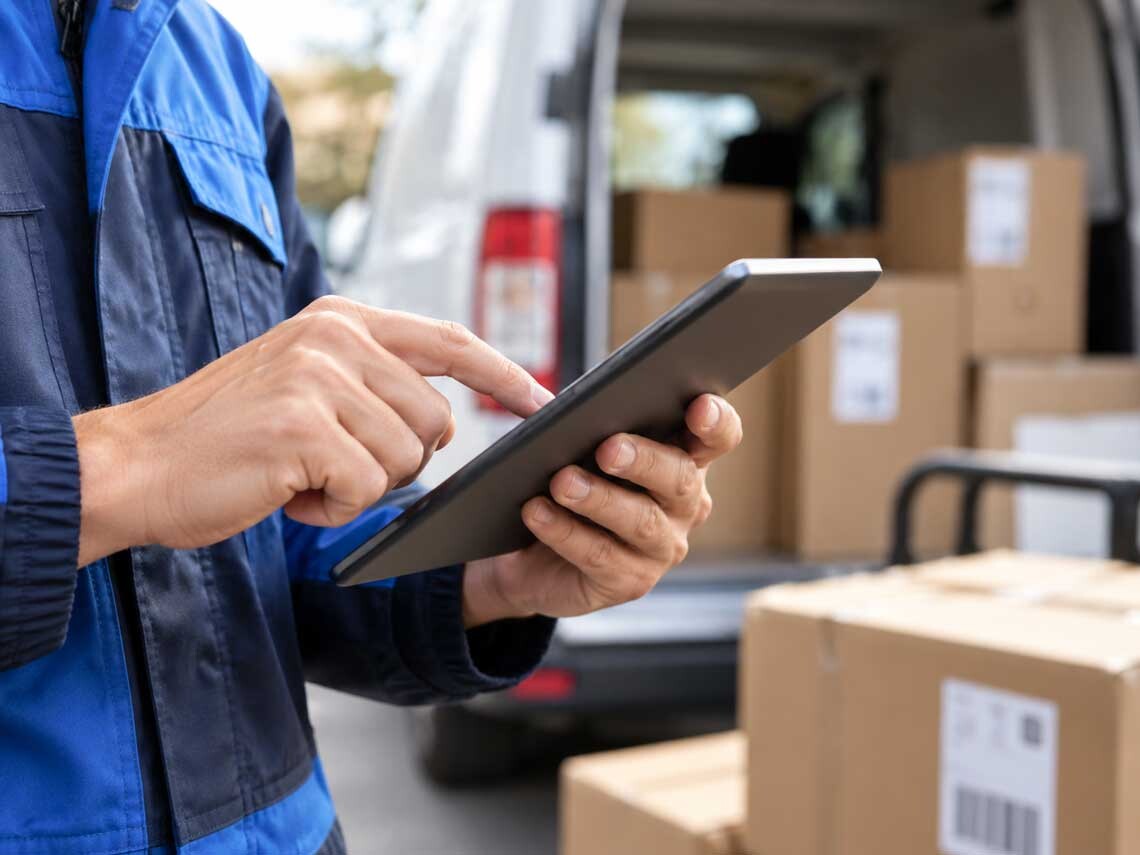

One shipment. One continuous record from the warehouse to the customer
The warehouse, dispatch, drivers, and accounting department all work with the same order data. Documentation travels alongside the shipment; dispatch monitors the delivery progress, while the driver records any changes or damage directly at the customer's location. Once receipt is confirmed, the up-to-date information becomes immediately available to the teams handling invoicing, returns, or claims.
Delivery will immediately prepare the materials for other teams
Actual quantities, shipment status, photographs, payment, and the customer’s signature are all recorded on-site. The accounting department receives the data needed for invoicing, customer service gains the information required to handle complaints, and the warehouse and dispatch teams get an accurate record of the delivery outcome—without needing to follow up with the driver.
One process for everyone who delivers orders
Whether it is your own fleet, an external carrier, or a regional branch, everyone follows the same rules and records the same data. The digital process establishes mandatory steps, simplifies the onboarding of new drivers, and helps manage an increasing volume of shipments without compromising quality or control.

Automated order journey from dispatch to revenue

Full delivery documentation in a digital workflow
Documents for shipment and handover of the order
- Warehouse issue slips and loading lists
- Standard and consolidated delivery notes for B2B and B2C
- Records of order handover and receipt
- Tracking of pallets and returnable packaging
Documents regarding non-conformities, complaints, and exceptions
- Records of shipment damage or incompleteness
- Reports on refusal to accept goods
- Records of return or warranty claim pickups
- Confirmations of cash or cash-on-delivery (COD) receipt
Delivery continues, even when things don't go according to plan
Confirm every handover on the spot in every sector
Expand digital delivery to include follow-up processes
Every delivery provides data for further improvement
The digital process creates a structured record of exceptions, damage, partial acceptances, and rejected shipments.
Instead of notes scattered on paper, you get comparable data across routes, drivers, and carriers.
This makes it easier to identify recurring issues, evaluate delivery quality, and improve future deliveries.

Finalize the delivery right on the spot and continue without delay

Case Study | LUNYS
800 orders and 4,000 crates every night. Without any paperwork
Challenge
At the 7,000 m² distribution center in Bratislava, workers prepare an average of 800 orders and 4,000 crates every night, handling nearly 50 tons of fruit and vegetables in the process.
Delivery notes, order changes, and cash payments were originally recorded on paper. Upon the drivers' return, the accounting department had to check the documents and manually enter the data into the system.
Solution
SIGNATUS replaced paper documentation with an application on drivers' tablets and integrated it with two key systems: an ERP and a fiscal module.
At the time of delivery, drivers can modify the order, record the current condition of the goods and any cash payments, and have the customer sign the documents. They then send all the data directly to the finance department.
Result
Information regarding delivered goods, changes, and payments becomes available in the central system immediately. The accounting department no longer needs to wait for the driver to return or manually transcribe paper delivery notes.
LUNYS can thus issue and send an electronic invoice to the customer on the very day of delivery, which accelerates the invoicing cycle and improves the company's cash flow.
Frequently Asked Questions Regarding the Automation of Goods or Services Delivery
Yes. Electronic delivery notes signed via SIGNATUS meet all requirements of the Act on Accounting and the eIDAS regulation. They include time stamps and unambiguous verification of the signatory, making them fully accepted by tax authorities and auditors alike.
The driver marks rejected items directly on the screen, specifies the reason, and attaches a photo of the damage using the camera. The final document, which is then signed, accurately reflects the quantity actually accepted and immediately notifies customer service.
SIGNATUS operates in a fully offline mode. All information and biometric signatures are securely stored in the device's encrypted memory and, upon connecting to the network, are synchronized with the ERP system without requiring any action from the driver.
No. Thanks to open APIs, SIGNATUS adapts to your existing software environment. It acts as a digital layer connecting systems with field operations.
Yes. Within a single confirmation of goods receipt, it is possible to record the quantities of returned pallets or packaging, as well as the receipt of items, thereby simplifying pallet management.

Simplify the delivery process for goods or services in your company
Schedule a demo of SIGNATUS tailored to your sales and delivery processes.
Contact us
