
Increasing efficiency with OEE: How to measure, analyze and improve the performance of production facilities
2023-05-05 | 18 min Logistics and Manufacturing
The main goal of every production manager is to ensure the efficiency of the production line. One way to measure performance and identify room for improvement is to calculate overall equipment effectiveness (OEE).
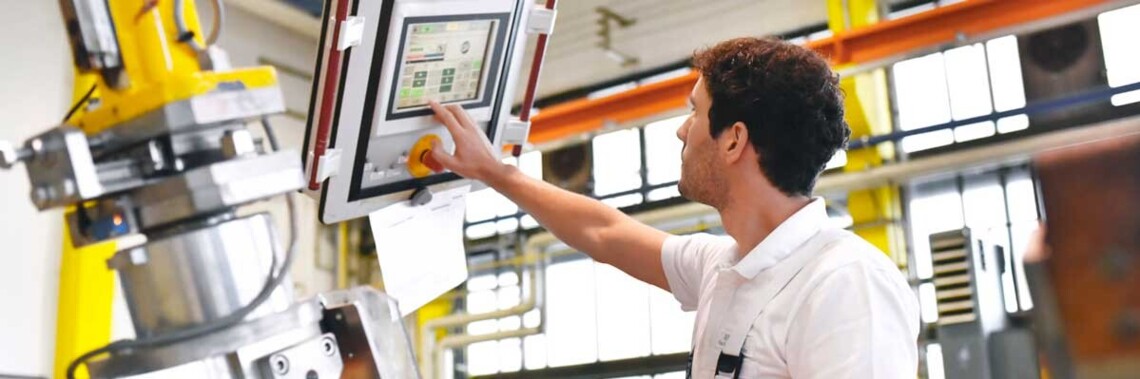
OEE is a fundamental metric for evaluating the performance of machines and equipment in manufacturing processes. It takes into account production performance, including output quality, production cycle speed, and equipment availability.
By regularly monitoring OEE, manufacturing businesses can:
- Optimize their processes,
- Improve machine utilization,
- Increase production capacity,
- And enhance product quality.
The Role of Overall Equipment Effectiveness (OEE) in Manufacturing Processes
Overall Equipment Effectiveness (OEE) measures three critical factors in manufacturing processes:
- Availability,
- Performance,
- And quality.
Availability refers to the time a machine is ready for operation, excluding downtime due to maintenance, setup, or other interventions.
Performance measures how the equipment operates compared to its maximum potential speed.
Lastly, quality refers to the proportion of good products produced compared to the total output.
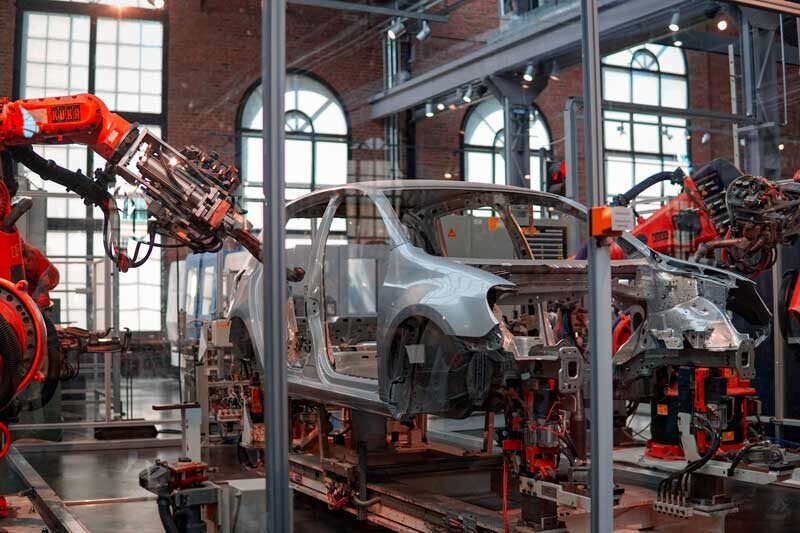
For example, in an automotive plant, OEE can help identify bottlenecks on production lines, such as slow welding machines or faulty painting robots. By addressing these bottlenecks, the plant can increase throughput and maintain a higher level of quality for finished products.
Utilizing Industry 4.0 Technologies to Improve OEE
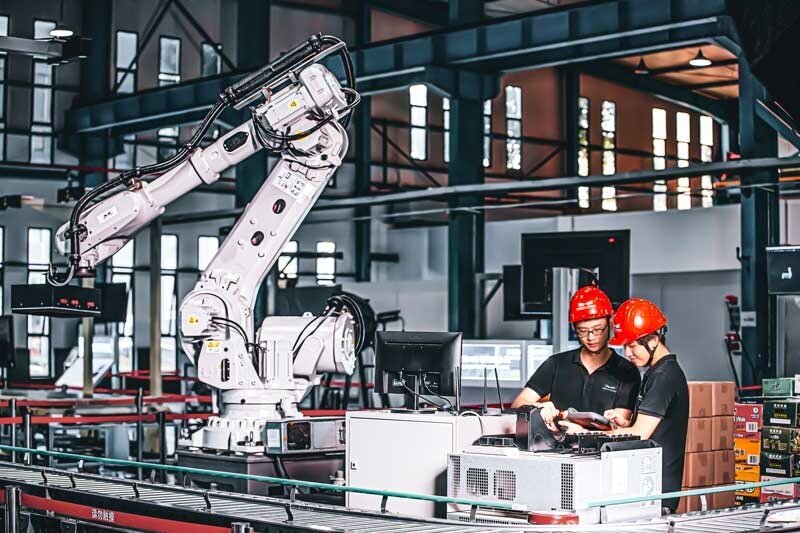
Industry 4.0 technologies, such as the Internet of Things (IoT), machine learning, and big data analytics, help significantly improve OEE. IoT devices can monitor machine performance in real-time and collect valuable data on availability, performance, and quality.
Machine learning algorithms can then analyze this data to identify patterns and trends, helping manufacturers detect areas for improvement and implement targeted enhancements.
For example, a semiconductor manufacturer might use IoT sensors to monitor temperature and humidity levels in production areas. Machine learning algorithms can analyze this data to detect any anomalies or patterns affecting the quality of semiconductor wafers. By addressing these issues, the company can improve its OEE and ensure the production of high-quality products.
Industry 4.0 technologies enhance OEE in the following ways:
- Real-time Data Monitoring and Analysis: IoT sensors and devices collect data from manufacturing processes, allowing real-time monitoring of equipment performance. This data can be used to:
- Optimize operations,
- Reduce downtime,
- And increase efficiency.
- Predictive Maintenance: Machine learning algorithms can analyze sensor data to identify patterns indicating potential equipment failures. This enables:
- Proactive maintenance,
- Reducing unplanned downtime,
- And increasing equipment availability.
- Adaptive Manufacturing Processes: Industry 4.0 technologies facilitate flexible manufacturing by adapting processes to changing conditions, such as demand fluctuations or material availability. This leads to higher productivity and optimized resource utilization.
- Digital Twins: Digital representations of physical assets can be used to optimize manufacturing processes, allowing businesses to:
- Eliminate bottlenecks,
- Coordinate production processes in real-time,
- And eliminate inefficiencies in resource management.
- Advanced Robotics and Automation: The integration of advanced robotics and automation improves the accuracy, speed, and consistency of manufacturing processes, leading to higher product quality and shorter production cycles.
- Augmented and Virtual Reality: AR and VR technologies can be used for training and remote assistance, improving the skills of designated employees and reducing the time needed to resolve equipment issues.
- Energy Management: Industry 4.0 technologies optimize energy consumption by monitoring and managing the use of production equipment and other technologies in operations, resulting in lower energy costs and reduced environmental impact.
- Improved Supply Chain Integration: Enhanced communication and data sharing between suppliers, manufacturers, and customers streamline the entire supply chain, reducing lead times and lowering inventory costs, thereby improving OEE.
- Quality Assurance and Control: Advanced inspection systems, combined with machine learning algorithms, detect defects and identify quality issues in real-time, allowing for immediate corrective actions and reducing the rate of defects.
- Customization and Personalization: Industry 4.0 technologies enable greater customization and personalization of products for clients through automation and optimization of manufacturing processes with systems such as MES, resulting in higher customer satisfaction and improved OEE.
The Role of OEE in Lean Manufacturing
OEE plays a crucial role in continuous improvement and lean manufacturing methodologies, which aim to eliminate waste and optimize processes in production. By identifying areas for improvement, OEE helps manufacturers focus on the most significant changes that lead to more efficient operations and cost reductions.
Imagine a food processing company using OEE to identify inefficiencies in its packaging line. By analyzing OEE data, the company may discover that a specific machine consistently underfills packages, leading to:
- Food waste,
- Customer dissatisfaction,
- And damage to the company's reputation.
By addressing this issue, the company can improve its OEE and optimize the packaging process, thereby minimizing waste.
OEE is an essential tool for production managers who seek to optimize their production lines and increase efficiency. By measuring performance across multiple processes, OEE can help identify areas for improvement and guide targeted interventions that lead to:
- Better machine utilization,
- Increased production capacity,
- And higher product quality.
By leveraging Industry 4.0 technologies and integrating OEE into continuous improvement and lean manufacturing methodologies, manufacturers can stay ahead of the competition and thrive in today’s fast-changing industrial environment.
Implementing lean manufacturing principles can improve OEE in the following ways:
- Continuous Improvement (Kaizen): Lean manufacturing promotes a culture of continuous improvement where employees help identify and address reduced productivity in operational processes. This can help increase equipment performance, reduce downtime, and improve OEE.
- Standardized Work: Standardizing work procedures and production processes helps reduce variability, ensures consistent quality, and improves equipment efficiency. By reducing human error and simplifying tasks, standardized work contributes to higher OEE.
- Just-in-Time (JIT) Production: The JIT approach focuses on producing the right products in the right quantity at the right time and place. This approach prevents excessive inventory and work-in-progress (WIP) while improving resource availability.
- Total Productive Maintenance (TPM): TPM emphasizes proactive and preventive maintenance to minimize equipment downtime and maintain optimal performance, thereby increasing equipment availability and operational readiness.
- SMED (Single Minute Exchange of Dies): SMED is a methodology aimed at reducing setup and changeover times, minimizing non-value-added activities, and increasing equipment utilization.
- Root Cause Analysis: This lean manufacturing method focuses on identifying and eliminating the root causes of problems, rather than just addressing symptoms. This leads to long-term solutions and fewer recurring issues.
- Visual Management: Visual aids, such as Kanban boards and Andon systems, facilitate communication and provide relevant real-time information about equipment status and performance. These tools help quickly identify and address problems, improving equipment performance.
- Value Stream Mapping: This lean manufacturing tool allows companies to analyze and optimize the entire production process, from raw materials to finished products. By identifying bottlenecks and waste-generating practices, companies can take targeted actions to improve OEE.
- Cross-Functional Teams: Lean manufacturing encourages collaboration between different departments and roles, leading to more efficient problem-solving and improved overall equipment effectiveness.
- Employee Training: Lean manufacturing also focuses on developing a skilled workforce. By investing in employee training and providing the necessary tools and resources, companies can improve productivity and equipment performance, ultimately leading to higher OEE.
Calculation of OEE Performance Measurement for Production Equipment
The calculation of Overall Equipment Effectiveness (OEE) performance measurement for production equipment is a crucial step towards improving manufacturing processes.
Understanding OEE provides relevant insights into where losses occur and helps identify areas that need optimization for sustained production growth. By identifying the sources of reduced efficiency, businesses can develop better methods and improve production practices at all levels—from machinery and labor to energy consumption.
Measuring OEE also supports better communication between departments, leading to higher quality and better customer relationships by delivering reliable results on time.
Recommended practices for OEE measurement include:
- Clearly define OEE metrics: Ensure that the three key components of OEE (availability, performance, and quality) are clearly defined and understood by all stakeholders.
- Use standardized formulas: Follow standardized formulas for calculating OEE factors:
Availability = Operating Time / Planned Production Time
Performance = (Total Produced Pieces * Ideal Cycle Time) / Operating Time
Quality = Good Produced Pieces / Total Produced Pieces
OEE = Availability × Performance × Quality
- Collect accurate and consistent data: Ensure that data collection methods are reliable, standardized, and consistent across production shifts, machines, and operators. Automated data collection through sensors and Internet of Things (IoT) devices helps minimize human error.
- Measure at the right level: Calculate OEE at the appropriate level of granularity, such as individual machines, production lines, or entire plants. This allows for better identification of performance gaps and areas for improvement.
- Establish a baseline: Set a baseline OEE value for your production process that can be used as a benchmark to measure improvements over time.
- Set realistic goals: Set achievable OEE goals based on benchmarks within your industry, historical performance, and your company’s specific objectives. These goals should be ambitious but attainable.
- Analyze losses: Identify and categorize losses affecting your OEE, such as equipment breakdowns, setup and adjustment times, reduced speed, and quality deviations. This helps address the root causes of these problems.
- Monitor OEE regularly: Consistently monitor and report OEE indicators to track progress and identify trends. Regular reviews help ensure improvements are sustained and reveal any emerging issues.
- Engage employees: Involve all relevant employees in the process of calculating and analyzing OEE, from operators to managers. This fosters a culture of ownership and collective effort.
- Review and adjust: Continuously evaluate and adjust your OEE calculation methods and goals as needed, based on changes in technology, process improvements, or evolving business objectives.
Best Practices for Improving OEE
To achieve higher levels of productivity and profitability, businesses should focus on best practices for improving Overall Equipment Effectiveness (OEE). The International Organisation for Standardization recommends incorporating Six Sigma methods and principles to diagnose the root causes of waste and create preventive measures to increase system efficiency. For example, a beverage company can apply Six Sigma principles to reduce variability in the filling process, achieving consistent product quality and minimizing waste.
The following Six Sigma principles help improve OEE:
- Define, Measure, Analyze, Improve, Control (DMAIC): The DMAIC methodology provides a structured approach to problem-solving and continuous improvement. Applying DMAIC to manufacturing processes helps identify and eliminate sources of inefficiency, improving availability, performance, and quality.
- Data-driven decision-making: Six Sigma emphasizes the importance of data collection and analysis for making informed decisions. By using data to identify inefficiencies and areas for improvement, manufacturing managers can target specific actions that will positively impact OEE.
- Process standardization: Six Sigma promotes consistency and repeatability by minimizing variability in processes. This leads to more predictable equipment performance, reduced downtime, and improved quality.
- Root cause analysis: Six Sigma methodologies, such as the 5 Whys or Ishikawa diagram, help identify and eliminate the root causes of problems rather than merely addressing symptoms. This results in more effective and long-term solutions that directly impact OEE.
- Statistical Process Control (SPC): SPC is a key Six Sigma tool for monitoring and controlling process variability. By identifying and mitigating sources of variability, production managers can maintain stable and efficient processes that improve OEE.
- Design for Six Sigma (DFSS): DFSS focuses on designing products and processes with quality and customer satisfaction in mind from the start. By integrating quality aspects early in the design phase, manufacturers can prevent defects and inefficiencies that could negatively affect OEE.
- Training and certification: Six Sigma provides a structured training and certification program (Yellow Belt, Green Belt, Black Belt, etc.) to develop employees' skills in problem-solving, data analysis, and process improvement. This fosters a culture of continuous improvement that often reflects in improved OEE metrics.
- Cross-functional teams: Six Sigma encourages collaboration between different departments and roles, resulting in a holistic approach to problem-solving and continuous improvement.
- Customer focus: By prioritizing customer needs and requirements, Six Sigma ensures that products and processes deliver higher value to customers. Improving product quality is part of enhancing overall equipment effectiveness.
- Waste reduction: Six Sigma methodologies focus on reducing waste and minimizing defects, leading to more efficient and cost-effective production processes. By reducing waste, manufacturing companies can optimize resource utilization.
In addition, adopting the Total Productive Maintenance (TPM) program helps keep machines running through regular maintenance checks and planned maintenance repairs. Integrating TPM into an Effective Plant Management system enables companies to achieve faster response times and better problem-solving capabilities during major breakdowns or downtime.
- Autonomous maintenance: Allows operators to perform basic maintenance tasks, such as cleaning and inspection. This often leads to faster problem identification and resolution, reduced downtime, and improved OEE availability.
- Planned maintenance: TPM emphasizes proactive and preventive maintenance by scheduling regular inspections and maintenance activities to avoid equipment failures. This approach helps minimize unplanned downtime, increase equipment availability, and positively impact OEE.
- Focused improvement (Kaizen): TPM promotes continuous improvement through small, incremental changes to processes and equipment. By identifying and addressing the root causes of reduced efficiency, manufacturing companies can improve equipment performance and quality, contributing to higher OEE.
- Early equipment management: This TPM principle involves designing and selecting equipment with maintenance, reliability, and ease of use in mind. By considering these factors throughout the equipment's lifecycle, manufacturers can reduce downtime and improve overall equipment performance, leading to better OEE.
- Training and education: TPM promotes skill and knowledge development for employees in the operation and maintenance of equipment. Properly and regularly trained employees can identify and solve problems more effectively, reduce downtime, and improve equipment performance.
- Safety, Health, and Environment (SHE): By prioritizing safety, health, and the environment in maintenance and production processes, TPM helps create safer and more productive workplaces. Such environments typically experience fewer accidents, reduced downtime, and better OEE performance.
Production Data Analysis and Identification of Areas for Improvement
Data analysis plays a crucial role in any business or organization. It serves as a fundamental tool for identifying areas for improvement and informing critical decisions. Effective data analysis requires patience, focus, and a comprehensive understanding of the trends occurring within your organization or business. The ability to distinguish key pieces of information from large datasets while recognizing overarching patterns and anomalies is invaluable for further enhancement.
A manufacturing company in the automotive industry can use data analysis to identify inefficiencies in its production line, such as bottlenecks or equipment downtime. By understanding which metrics are most important and analyzing them for real-time insights, production managers can pinpoint deficiencies and propose potential solutions for improvement. Consequently, data analysis enables organizations to better understand their processes and make informed decisions that positively impact growth and progress.
- Identifying trends and patterns: By analyzing historical data, production managers can identify trends and patterns that directly affect OEE, such as recurring equipment failures or performance fluctuations. This information can be used to target improvements and address the root causes of these issues.
- Real-time monitoring: Collecting and analyzing real-time data allows production managers to identify and address problems as soon as they arise, reducing downtime and minimizing the negative impact on OEE.
- Predictive maintenance: Data analysis can be used to develop predictive maintenance models, allowing manufacturing companies to predict equipment failures and perform maintenance before issues arise that could shut down production lines. This proactive approach improves equipment availability and reduces downtime, positively impacting overall equipment effectiveness (OEE).
- Process optimization: Production data analysis is key to identifying bottlenecks, reduced efficiency, and performance issues, as well as areas with the most waste in production. By addressing these problems, manufacturing companies can optimize their processes, improve performance, and increase OEE.
- Quality control: Data analysis is often used to monitor product quality and identify defects or deviations from established standards. This allows manufacturers to take corrective actions, reduce scrap rates, and improve the quality component of OEE.
- Benchmarking: Comparing OEE data with industry benchmarks or historical performance helps manufacturing companies identify areas for improvement and set realistic goals to enhance their OEE.
- Resource allocation: Production data analysis provides insights into the utilization of manufacturing equipment and consumption of enterprise resources. This information is further used to optimize resource allocation and improve equipment performance, thereby increasing OEE.
- Performance measurement: Regular monitoring of OEE and its factors—availability, performance, and quality—helps manufacturing companies measure the effectiveness of their improvement efforts and adjust their strategies as needed for new challenges.
- Customized solutions: Data analysis reveals unique challenges and opportunities specific to a particular production process or piece of equipment. By understanding these nuances, manufacturing companies can develop their own solutions or commission tailored solutions to improve OEE.
Implementing Automation Solutions to Increase Production Efficiency
Automation solutions have a transformative impact on production efficiency, enabling more efficient and cost-effective manufacturing processes. From demand prediction based on machine learning to integrated supply chain systems, automation has the potential to streamline previously complex processes. By leveraging predictive analytics to forecast production issues, manufacturers can implement proactive adjustments that might otherwise go unnoticed.
Additionally, automation solutions allow manufacturers to track the development of parts and even visually inspect products moving along the assembly line with greater speed and accuracy than ever before. For example, an electronics manufacturer could use automation and computer vision technology to detect defects on circuit boards, ensuring increased product quality and reducing the need for time-consuming manual inspections.
Ultimately, integrating automation solutions into existing manufacturing processes offers numerous unique benefits that allow companies to save time and money while producing high-quality goods quickly and efficiently. By harnessing data analysis and automation, organizations can achieve new levels of productivity and competitiveness.
- Increased availability: Automated systems can operate continuously, reducing downtime caused by human factors such as breaks, shift changes, or fatigue. This increased equipment availability directly contributes to higher OEE.
- Faster production speed: Automated machines can perform tasks faster and more consistently than human workers, resulting in higher production speeds and improved performance, positively impacting OEE.
- Consistent production: Automation reduces variability in manufacturing processes, ensuring consistent output and quality. This consistency can help improve the quality component of OEE.
- Shorter setup and changeover times: Automated equipment can be programmed to quickly switch between different tasks or product configurations, reducing downtime associated with manual changes and improving OEE availability.
- Real-time monitoring and control: Automation systems can be equipped with sensors and monitoring tools that provide real-time data on equipment performance. This information can be used to optimize operations and make adjustments as needed, further improving OEE.
- Improved safety: Automation can reduce the risk of accidents and injuries in the manufacturing process by performing tasks that may be dangerous for human workers. This can lead to a safer work environment, fewer accidents, and reduced downtime, positively impacting OEE.
- Increased flexibility: Automated production systems can easily be reprogrammed or reconfigured to accommodate changes in product design, production volume, or market demand. This flexibility can help improve equipment utilization and performance, contributing to higher OEE.
- Better integration with other enterprise systems: Automated production systems can be easily integrated with other systems, such as material handling, inventory management, or quality control, allowing for a more streamlined and efficient production process that can lead to improved OEE.
Monitoring and Tracking OEE Improvement
Utilizing technology to monitor and track the continuous improvement of Overall Equipment Effectiveness (OEE) is an effective strategy to boost productivity. By leveraging predictive analytics, machine learning, and real-time monitoring capabilities, companies can maintain continuous oversight of their production lines and make data-driven adjustments or improvements as needed. Comprehensive analysis of data gathered through these methods enables managers to identify opportunities for increasing efficiency and optimizing processes further.
For example, a food and beverage manufacturer could use advanced sensor technology to monitor OEE in real time, allowing for the quick identification of bottlenecks or equipment malfunctions. This information can guide decisions on improving production equipment or adjusting processes. By effectively deploying the right technologies, companies can significantly improve the performance of their production lines.
This includes ensuring accurate performance calculations, thorough data analysis, and identifying processes where automation could make a significant impact. For instance, a pharmaceutical company might implement Robotic Process Automation (RPA) for routine tasks, freeing up employees to focus on more critical duties and further contributing to OEE improvement.
Ultimately, with the right combination of data analysis, automation solutions, and best practices implementation, organizations can significantly streamline their production operations. This comprehensive approach allows companies to remain adaptive in an increasingly challenging and ever-changing manufacturing environment.
In conclusion, to achieve continuous improvement in Overall Equipment Effectiveness (OEE) in manufacturing, consider these practical tips:
- Embrace a culture of continuous improvement: Encourage employees to actively seek opportunities for improvement and create an environment where suggestions and innovative ideas are welcomed and rewarded.
- Invest in employee training and development: Equip your staff with the necessary skills and knowledge to operate, maintain, and improve equipment performance. Cross-training employees can also help ensure that essential expertise is always available.
- Leverage digital technology: Use modern technologies such as the Industrial Internet of Things (IIoT), advanced sensors, and data analytics to collect and analyze real-time data for more informed decision-making and proactive problem-solving.
- Set realistic and measurable goals: Establish achievable OEE goals based on industry benchmarks, past performance, and the specific objectives of your business. Regularly monitor and adjust these goals to ensure they remain relevant and effective.
- Implement a balanced approach: Focus on improving all three components of OEE (availability, performance, and quality) to ensure a comprehensive improvement strategy that maximizes overall efficiency.
- Foster cross-departmental collaboration: Encourage collaboration between different departments and teams to share knowledge and best practices, enabling more efficient problem-solving and innovative solutions.
- Conduct regular audits and evaluations: Regularly assess your production processes and equipment to identify potential areas for improvement and evaluate the effectiveness of implemented changes.
- Learn from failures: Treat equipment failures and process inefficiencies as learning opportunities to identify root causes and develop long-term solutions.
- Benchmark against industry leaders: Study the best practices of industry leaders and adopt relevant strategies to continuously improve your own OEE.
- Celebrate successes: Celebrate improvements in OEE to motivate employees and maintain momentum toward continuous improvement.
Need to improve your OEE? Our experienced smart industry consultants and analysts are ready to help you elevate your production to a higher level of performance. Contact our smart industry team.


