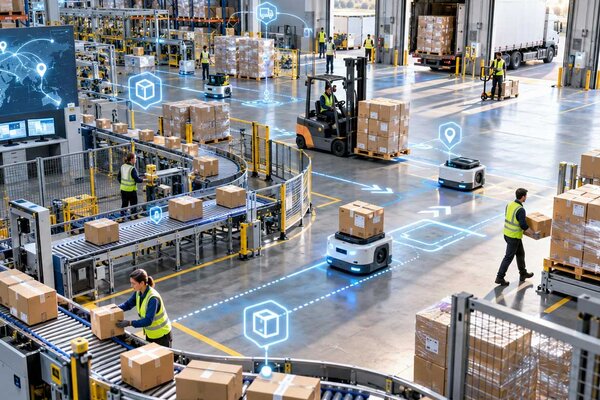
Warehouse has changed. Why hasn't your warehouse software changed yet?
2026-05-19 | 14 min Logistics and Manufacturing
The warehouse was once a relatively predictable environment. Stable assortment, clearly defined processes, batch processing of orders. Warehouse systems were designed to reliably manage this reality:
- recording transfers,
- optimizing picking routes,
- maintaining order in data and operations.
And it worked. The warehouse was a place where the plan was executed.
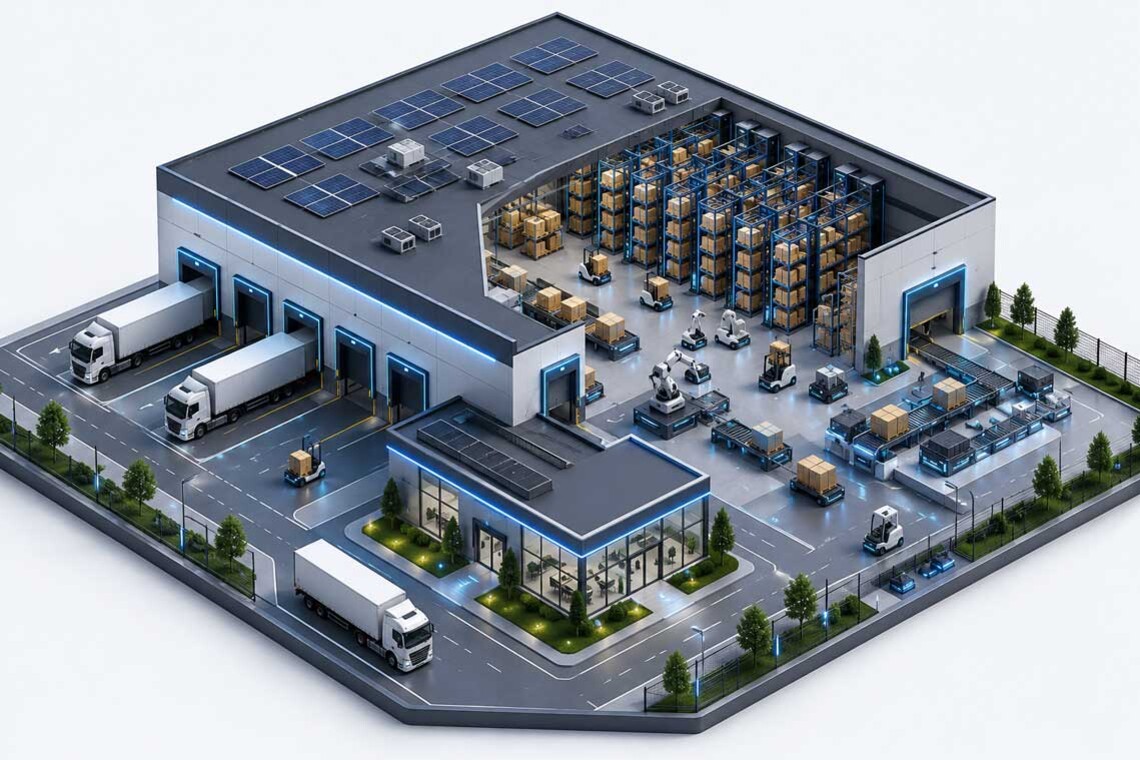
Today, however, warehouses are changing faster. Assortments have exploded into thousands to tens of thousands of SKUs, orders arrive continuously and from different channels, and priorities change within minutes.
On top of that come various levels of automation, pressure for immediate delivery, and a chronic shortage of labor. Warehouse management is thus changing from executing a plan to constant real-time decision-making.
And this is exactly where the tension arises that most operations feel but cannot precisely name. When the warehouse cannot keep up, when bottlenecks arise, or when automation does not deliver the expected effect. Is the problem in the operations? Or in the fact that the system managing them was designed for a completely different reality?
The reality in warehouses has changed fundamentally
If you look at how most warehouses operate today, this is not just an evolutionary change. It is a fundamental shift in what a warehouse does and what demands the business places on it. This shift is not always visible at first glance, but it fundamentally changes the way inventory management and warehouse management itself should work
SKU explosion: More items, smaller volumes
One of the most significant trends is the dramatic increase in the number of stored items. An assortment that was once relatively narrow and stable is now fragmenting into thousands of variations, from size and packaging to seasonal products and short-term campaigns.
From an operations perspective, this means one thing:
- smaller volumes per SKU
- more frequent movements
- significantly higher complexity in picking
Picking, which was once optimized for volume, must now be optimized for variability. And that is a fundamentally different problem. Traditional approaches to warehouse optimization are beginning to hit their limits here.
Omnichannel logistics as the new standard
Another fundamental change is the convergence of distribution models. A warehouse no longer serves only one type of customer or one channel. Today, the following commonly take place in a single space:
- B2B distribution (pallet orders)
- B2C distribution (piece orders)
- e-commerce logistics (high frequency, low volumes, extreme speed requirements)
Each of these flows has different processing requirements, a different priority, and often different time requirements for picking and shipping, sometimes within a single day.
What once was sufficient to plan in batches now requires the ability to continuously reassess priorities in real time. The warehouse is thus becoming an environment where several “realities” run in parallel at once.
Chronic labor shortage
Another factor enters this already complex situation: people. The long-term shortage of labor in logistics is not just a human resources problem. It is an operational factor that fundamentally affects warehouse performance. Fewer workers mean:
- higher pressure on productivity
- lower tolerance for inefficiency
- greater dependence on the system
In practice, this means that it is no longer enough to “record and manage tasks.” The system must actively decide:
- who to assign work to
- in what order
- with what priority
Fragmentation of the assortment, omnichannel distribution, and pressure on labor together create an environment that is fundamentally dynamic. And it is precisely in such an environment that it becomes increasingly clear that the original principles are no longer enough.
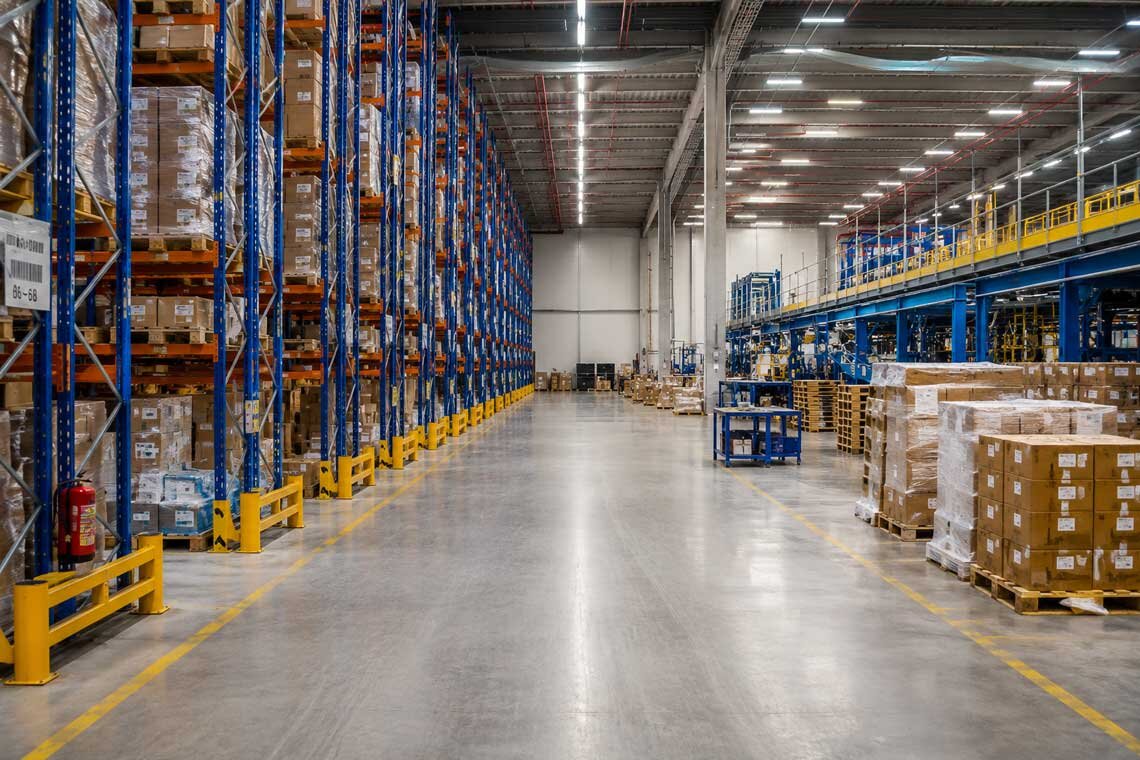
Most warehouse systems were designed for a different world
Warehouse systems were originally designed for a different process dynamic.
When the warehouse operated in batches
The original logic was based on the assumption that the warehouse could be planned in advance. Orders arrived in relatively predictable waves, processes were stable, and the flow of materials had a clear structure.
This was also reflected in the way warehouse process management worked:
- orders were grouped into batches
- picking was planned in advance based on optimized routes
- the system executed the plan, it did not continuously reassess it
This model was effective as long as reality behaved according to expectations. And at that time, it mostly did.
When the system reacts but does not decide
The problem arises when this model meets today’s dynamics. Most traditional warehouse systems are built on the principle of sequential management:
- tasks are generated in a certain order
- operations proceed step by step
- changes are handled as exceptions, not as the standard
Such an approach has its limits. The system can react to a change, but it cannot naturally absorb it in real time. Every deviation from the plan (an urgent order, a worker absence, a change in priority) means intervention, replanning, or manual decision-making.
The result is that warehouse process management shifts back to people, who must “rebalance” the situation operationally.
Low real-time adaptability
From the perspective of system design, the key difference is that a traditional warehouse system works with time differently. Not in continuity, but in intervals.
- plan → execution → evaluation
- not: perception → decision → immediate adaptation
In a stable environment, this is sufficient. In a dynamic environment, it creates a delay between what is happening in the warehouse and how the system responds to it.
And this delay is now the source of the largest share of inefficiency in the warehouse:
- unused capacities
- unnecessary movements
- conflicts between priorities
To simplify: a traditional warehouse system was designed to maintain order in a warehouse that does not change too quickly. Today’s warehouse, however, changes constantly. And that places completely different demands on what its management should look like.
Static vs. dynamic warehouse management
If we want to understand why we are now hitting the limits of traditional systems, it is not enough to talk about functions or modules. The key difference lies deeper, in the very principle of how the system approaches warehouse management.
The difference between a static and a dynamic model is not a technological detail. It is the difference between whether the system “executes” the warehouse or actively “manages” it in the context of the current situation.
Static model
The static model is based on the assumption that the optimal decision can be made in advance. Based on available data, a plan is created and then executed.
In practice, this means:
- planning picking in batches
- fixed rules for task allocation
- optimization at the beginning of the process, not during it
This approach has its logic. It enables stability, predictability, and relatively simple control over processes. The problem arises, however, when reality deviates from the plan, which today is more the rule than the exception.
In such a case, the system does not respond proactively, but reactively:
- tasks are replanned
- priorities are adjusted afterward
- operators make decisions “on the spot”
In other words, optimization of warehouse processes takes place ex ante, but not during the actual execution.
Dynamic model
The dynamic model is based on the opposite assumption: that the optimal decision does not arise in advance, but at a specific moment, based on the current state of the system.
This fundamentally changes the way real-time management works:
- tasks are not assigned fixedly, but continuously
- priorities are not planned, but constantly recalculated
- the system takes into account the current availability of people, technologies, and orders
In such a model, the warehouse does not behave like a sequence of steps, but like a living system that constantly adapts.
Specifically, this means:
- an urgent order is immediately reflected in the order of tasks
- a worker absence automatically changes work allocation
- a change in technology load leads to rerouting of the flow
Decision-making thus shifts from planning to execution.
Why this difference is critical today
In an environment that is variable, fast, and often unpredictable, the static model is no longer sufficient. Not because it is wrong, but because it works with a different type of reality.
The dynamic approach, on the other hand, enables:
- continuous optimization of warehouse processes
- better use of available capacities
- elimination of unnecessary delays
And above all, it shifts intelligence from the “beginning of the process” directly into its course. This is where the paradigm begins to change.

Want to learn more about WMS?
Find out moreWhere the difference shows in practice
The difference between static and dynamic management is not abstract. It shows directly in day-to-day operations, in how quickly the warehouse responds, how efficiently it uses resources, and where bottlenecks arise (or do not arise).
For a warehouse manager, this is not a question of system architecture. It is a question of results:
- how many orders we process,
- in what time
- and with what level of intervention.
Picking: Batches vs. continuous flow
In the traditional model, the picking process is managed in batches. Orders are first accumulated, then a wave is created, and that wave is executed as a whole.
The advantage is clear: optimized routes, transparency, control.
The disadvantage becomes apparent when reality does not match the plan:
- new orders wait for the next wave
- urgent requirements disrupt existing batches
- capacities are not used continuously
The dynamic approach, on the other hand, works with a continuous flow:
- orders enter the process continuously
- tasks are generated and assigned in real time
- the system optimizes movement not at the beginning, but continuously
The result is not “better-planned picking,” but a smoother and more adaptive flow of work.
Order priorities: Static vs. dynamic
In the static model, priorities are defined in advance:
- by customer type
- by order time
- by planned dispatch
However, once the situation changes, for example an urgent order arrives or part of the process is delayed, the system has no natural mechanism to reflect this change immediately.
In practice, this means:
- manual interventions
- rewriting priorities
- conflicts between orders
Dynamic real-time management works differently. Priority is not a fixed value, but the result of the current context:
- availability of resources
- work-in-progress status
- time priorities of individual orders
The system thus continuously decides what makes sense to process now, not what was important an hour ago.
Use of technologies: Isolated systems vs. orchestration
Many warehouses today have invested in automation: conveyors, sorting systems, AS/RS, pick-to-light. However, the problem is often not in the technology itself, but in how it is managed.
In the static model, individual technologies function more or less in isolation:
- each has its own logic
- the warehouse system assigns tasks to them sequentially
- coordination is limited
This leads to situations where:
- one part of the warehouse is waiting while another is overloaded
- automation is not running at maximum capacity
- hidden bottlenecks arise
The dynamic approach introduces a layer that connects these elements:
- the flow of work is managed across the entire warehouse
- the system takes into account the status of individual technologies
- decisions are made with regard to the whole, not isolated parts
In other words, logistics automation begins to function as a coordinated system, not as a set of tools.
Operator work: Manual decision-making vs. system management
Perhaps the least visible, but all the more important difference concerns people. In the static model, the system assigns tasks, but real decision-making often remains with the operators:
- what to do first
- which task to skip
- how to react to a change in the situation
An experienced worker thus compensates for the limits of the system.
However, this has its consequences:
- unpredictable quality of performance
- dependence on individuals
- more difficult scalability
In the dynamic model, decision-making moves into the system:
- tasks are assigned in the context of the current situation
- the operator focuses on execution, not decision-making
- the system bears responsibility for warehouse efficiency
The result is not only higher performance, but also consistency across shifts, teams, and operations. What at first glance appears to be a technical difference in management manifests itself very concretely in practice: in the speed, smoothness, and ability of the warehouse to handle complex situations without downtime.
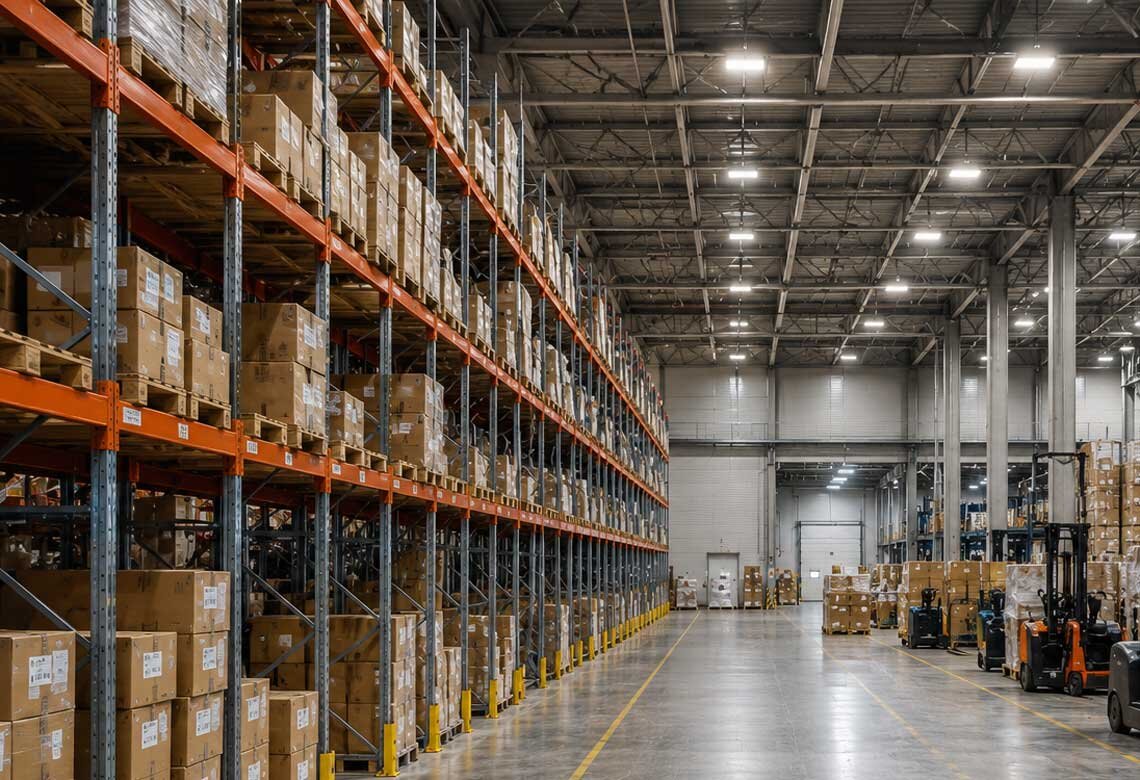
The problem is not in your warehouse. It is in the management paradigm
When problems start to appear in a warehouse (delayed orders, overloaded sections, unused capacities), the natural reaction is to look for the fault in operations. In the warehouse layout, in people, in the process.
In many cases, however, the reality is different. The warehouse is doing exactly what it was designed to do. Only the environment in which it operates has fundamentally changed.
The warehouse is functioning correctly. Just according to the wrong assumptions.
Most of today’s warehouses have processes set up logically:
- defined zones
- optimized routes
- standardized procedures
The problem is not that these principles are wrong. The problem is that they are being applied to an environment that can no longer be managed effectively in a static way.
If the system assumes stability, but reality is dynamic, a constant mismatch arises:
- the plan does not reflect the current state
- priorities change faster than the system can process them
- decision-making moves outside the system
Operations put out symptoms, not the cause
A typical manifestation of this mismatch is that the warehouse “works,” but at the cost of constant interventions:
- the shift supervisor rearranges priorities
- operators optimize their work intuitively
- urgent orders are handled outside the standard process
At the level of individual situations, this makes sense. At the system level, however, it means that warehouse management is happening outside the management system.
This has two consequences:
- performance is inconsistent
- scaling is problematic
Unused potential is now a bigger problem than inefficiency
Interestingly, in many warehouses, the primary issue is not “bad processes.” It is that existing resources such as people, technologies, and space are not being used to their full potential.
Not because it would be impossible. But because the system cannot coordinate these resources in real time.
The result is situations every manager knows:
- one part of the warehouse is idle, another cannot keep up
- workers wait for tasks, while queues form elsewhere
- automation has reserve capacity, but the flow of work does not use it
The management paradigm as a limiting factor
At this point, it is no longer about optimizing individual processes. It is about how the warehouse is managed as a whole.
If management is based on:
- advance planning
- fixed rules
- sequential execution
then the warehouse will always react with a delay. And this delay is now the biggest limitation. Not the physical infrastructure. Not people. But the way the system interprets and manages reality.
From management to orchestration
If we look at where warehouses are heading, it is not just about higher performance or a greater degree of automation. The very essence of what it means to manage a warehouse is changing.
A warehouse is no longer an environment that is enough to “set up” and then control.
It is a dynamic system in which inputs, conditions, and priorities are constantly changing.
In such an environment, management ceases to be about control. It begins to be about coordination.
The warehouse as a living system, not a set of processes
The traditional view of the warehouse works with processes:
- receiving
- storage
- picking
- dispatch
Each step has its own rules, its own optimization, its own logic. Today’s reality, however, is different. These processes no longer function in isolation. They constantly influence one another:
- picking depends on the status of dispatch
- dispatch depends on the availability of resources
- resources depend on the current load of technologies
The warehouse thus behaves more like an interconnected system than a linear sequence of steps. And that is precisely why the way it should be managed is also changing.
From execution to orchestration
If until now we have spoken about management as the execution of a plan, today we are increasingly arriving at a concept that is relatively new for logistics: orchestration of warehouse processes.
Orchestration means that the system:
- does not plan everything in advance, but makes decisions continuously
- does not coordinate only tasks, but the entire flow of work
- does not perceive processes separately, but in the context of the whole
Just as a conductor does not play the individual instruments but manages their interplay, the warehouse system also begins to manage the interaction between:
- orders
- warehouse operators
- technologies
The need for a new management layer
This shift naturally leads to the need for a new layer in the warehouse architecture. Not a layer that replaces existing systems. But a layer that connects them and gives them context.
A layer that:
- coordinates processes across the entire warehouse
- responds to changes in real time
- optimizes decisions based on the current situation, not a historical plan
In this context, the term WES system (Warehouse Execution System) is appearing more and more often as a natural response to the fact that warehouse process management alone is no longer enough. It is necessary to orchestrate and connect them and manage them as a whole.
It is not about technology. It is about a way of thinking.
What is important is that this shift is not primarily technological. It is conceptual. It is not that warehouses need “more software.” It is that they need a different way for software to think about reality.
From an environment where:
- planning happens first and execution follows
we are moving into an environment where:
- continuous evaluation takes place and decisions are made immediately
And it is precisely this shift from management to orchestration that will determine which warehouses will be able to handle the growing complexity of processes.
Perhaps you are not looking for the problem where it really is
When the warehouse cannot keep up, when exceptions pile up, when performance fluctuates depending on the shift or specific people, we usually look inside operations. We look for a weak point in the processes, in the inventory layout, in the team. It is logical. But increasingly often, it is not accurate.
Many warehouses today operate at the edge of their potential not because they are poorly designed, but because they are managed in a way that does not correspond to the reality in which they operate. The system does what it was created to do; only the world around it has changed in the meantime.
And that is why it may be appropriate to ask yourself a simple but fundamental question:
Is your warehouse the problem, or only the system that manages it?
This question is not about technologies. It is about how we think about management, about decision-making, and about where value actually arises in your warehouse processes.