
Adaptation of sequential logistics to lean and flexible supply | Interview
2021-02-15 | 7 min Logistics and Manufacturing
Suppliers and operators will focus more on such logistics solutions and operational strategies that will allow maintaining the continuity and sustainability of both operational and business processes.
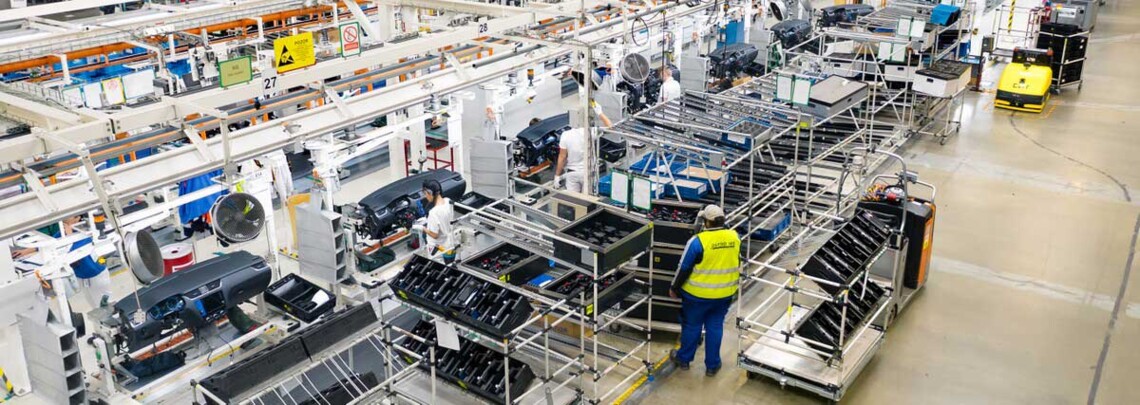
The pandemic has contributed to the acceleration of digitalization across various industries for objective reasons, including logistics.
"Many businesses expect or plan changes to their operational strategies as a result of the coronavirus pandemic, primarily focusing on solutions and operational models that ensure continuity and sustainability of both operational and business processes," explains Peter Bílik, Smart Industry Solution Designer at ANASOFT, in an interview for the Systémy Logistiky magazine.
What, in your experience, is the foundation for setting up well-functioning collaboration in sequential picking? What needs to be systematically addressed to ensure deliveries are accurate and seamless?
The foundation for establishing effective collaboration between a parts supplier and a customer (manufacturer) in terms of inventory and logistics flow management is data transparency and system integration. Data transparency throughout the chain—from the customer, specifically their assembly line, to the supplier, including their warehouses and intermediary storages—helps streamline supply flows and reduce inventory at assembly lines, which are the advantages of Just-in-Time/Just-in-Sequence supply systems. Additionally, it enables real-time inventory management, which is becoming an increasing priority for manufacturing companies that must handle fluctuating customer demand and growing product variability for greater personalization.
Integration is the means to achieve this, especially in an era where the production and supply paradigm is transforming into a demand-driven pull system. Therefore, digitalization is essential, and among larger enterprises and their suppliers (OEMs in the automotive sector), it has become the standard. Corporate systems of customers and suppliers are synchronized and coordinated, particularly in planning.
What needs to be systematically addressed?
This depends on the specific processes within the supply chain, as every operation has its own particularities based on the services it provides. Accurate and seamless deliveries involve numerous diverse procedures and requirements that must be addressed by the given operation—even in a standardized environment like the automotive industry.
We have long been involved in the field of production logistics and supply for the automotive sector, and projects and requirements vary widely, even though the primary focus is on Just-in-Time/Just-in-Sequence supply.
On one hand, you have a wheel supplier who assembles wheels on their unmanned, fully automated assembly line. This line is integrated with the planning system of the automotive plant, allowing it to flexibly adjust production schedules based on new customer demands or needs (the production cycle for one wheel is 22 seconds) and dispatch the required wheels to the car manufacturer's assembly line within minutes.
On the other hand, you have a supplier managing international supply chains and, in a warehouse near the car plant, not only delivers but also finalizes components—preparing them for assembly sequences and conducting quality checks before final Just-in-Sequence delivery to the car manufacturer's assembly line.
In the first case, the subcontractor must also manage their assembly line. In the second, it involves bumper assembly but also managing cable harness supplies. Thus, the supplier must efficiently operate bumper assembly workstations (managing tools according to correct technical specifications in a flow of variable production) to ensure their required quality while also managing lean and precise cable harness inventory, ensuring the accuracy and flawlessness of these components.
This is achieved through preventive quality diagnostics, maintaining stock capacity to prevent disruptions, and ensuring optimal warehouse utilization based on end-customer order predictions. For managing cable harness deliveries, the WES (Warehouse Execution System) is used to guarantee Just-in-Sequence deliveries.
Both projects involve complex and sophisticated logistical solutions with specific requirements and parameters.
Data transparency and system integration between the customer and supplier are essential for accurate, timely, and flawless deliveries in lean supply chains.
This is particularly true in emergency or exceptional situations when the customer and supplier must respond without delay. Additionally, data transparency and system integration are necessary to meet the standard requirements of companies for optimizing material flows, reducing downtime and disruptions, eliminating waste, and, of course, operational cost optimization remains a timeless priority.
All of this is now inseparable from digitalization, automation, and intelligent logistics solutions, as evidenced by the recent COVID-19 crisis.
Do you see any trends in sequential picking? Where is this area heading, and what can we expect? How do you think artificial intelligence will influence sequential picking systems? What new elements will it bring, and what changes might occur—what is your prediction?
The pandemic has rewritten trends not only in sequential picking but also in supply chain management as a whole. Previously, trends generally revolved around "wearables" like scanners and readers embedded in gloves instead of traditional handheld barcode readers, semi-automated AGVs, and fully automated AGVs. However, in 2020, logistics faced greater challenges, particularly in global supply chains.
Some businesses discovered that while they had lean material flows, they did not account for the possibility of international disruptions in material and component supplies. The pandemic is just one factor affecting global and international supply chains. Climate change and geopolitical-economic tensions between countries are also contributing factors. These developments are leading to a partial deceleration of globalization and a predicted greater focus on regional suppliers and supply chains.
Can you mention another trend?
Certainly. There is an increased emphasis on customer-centric approaches, focusing on meeting customers' individual preferences for products and services. This includes serial production aimed at more frequent product rotation and greater variability. Both of these trends directly impact supply chains and Just-in-Sequence/Just-in-Time supply systems, including sequential picking.
We can already state that the pandemic has accelerated digitalization across various industries for objective reasons, including logistics. Many businesses expect or plan changes in their operational procedures due to the coronavirus pandemic, focusing primarily on solutions and operational strategies that ensure the continuity and sustainability of both logistics and business processes.
This means companies will focus on creating agile business strategies that not only ensure lean material flows and supply systems but are also flexible and resilient enough. This allows them to dynamically adapt to newly emerging conditions or situations both within and outside the company. For Just-in-Sequence/Just-in-Time deliveries, this includes, for example, maintaining emergency stock for temporary supply disruptions.
One pre-pandemic trend was the expansion of supplier services or transferring certain tasks traditionally handled by manufacturers to suppliers. Is this correct?
Yes, suppliers are expanding their service portfolios to include pre-assembly preparation of parts, component assembly (even from other suppliers), various types of quality testing, repackaging materials, and other services within Just-in-Sequence/Just-in-Time processes. Intelligent management systems that are scalable and modular enable suppliers to provide these additional services, alongside primary benefits like performance, capacity, and supply speed optimization.
Given the potential of digital technologies and the revision of supplier business models focused on service provision, we can expect that additional (including assembly) services will soon become the norm, as has already occurred with some suppliers. Eco-logistics initiatives are also a hot topic, where digital technologies play a significant role. In this regard, the concept of a circular supply chain is also interesting and is expected to take tangible form in practice soon.
What role do you attribute to artificial intelligence?
Self-learning algorithms and artificial intelligence (AI) are already being used in intelligent logistics solutions, including Just-in-Sequence/Just-in-Time supply systems (e.g., in WES modules of Smart Industry systems). Given the large volumes and variability of supplied parts and intermediate products, as well as the diversity of their manufacturers/suppliers, these algorithms are already being used to synchronize and coordinate various flows in real-time supply management.
They are also utilized for dynamic slotting in intermediary warehouses to ensure the shortest possible supply cycles. In light of the pandemic's impacts, the adoption of AI-based solutions and systems will grow in the coming period—from data analysis (predictive models for forecasting part supply based on structured data, as well as consumer behavior and demand projections from unstructured data, which will subsequently dictate production and supply plans) to autonomous logistics management.
With growing digitalization and automation, AI technologies will increasingly be used. Supplier companies are already implementing digital twin technologies (intelligent autonomous agents, software bots), for example, for Just-in-Sequence/Just-in-Time management in part supermarkets or buffers, as well as for integrating assembly and supply processes and intelligent resource allocation and management (human, material, and technological).
This interview was originally published on the Systémy Logistiky magazine website.


