MultiSport isn’t just about the gym. It’s a way to make time for yourself | Interview
2026-10-13 | 12 min Anasoft
Many people know the MultiSport card as a benefit for sports activities. In reality, however, it opens up a much broader world of possibilities—ranging from swimming, yoga, and Pilates to wellness, cycling, padel, and bowling, as well as visits to castles, museums, and botanical gardens, or activities for families with children. We spoke with Barbora Gajdošová, a representative from MultiSport, about how to make the most of the card, why physical activity is important for mental well-being, and why getting started is often the hardest part.
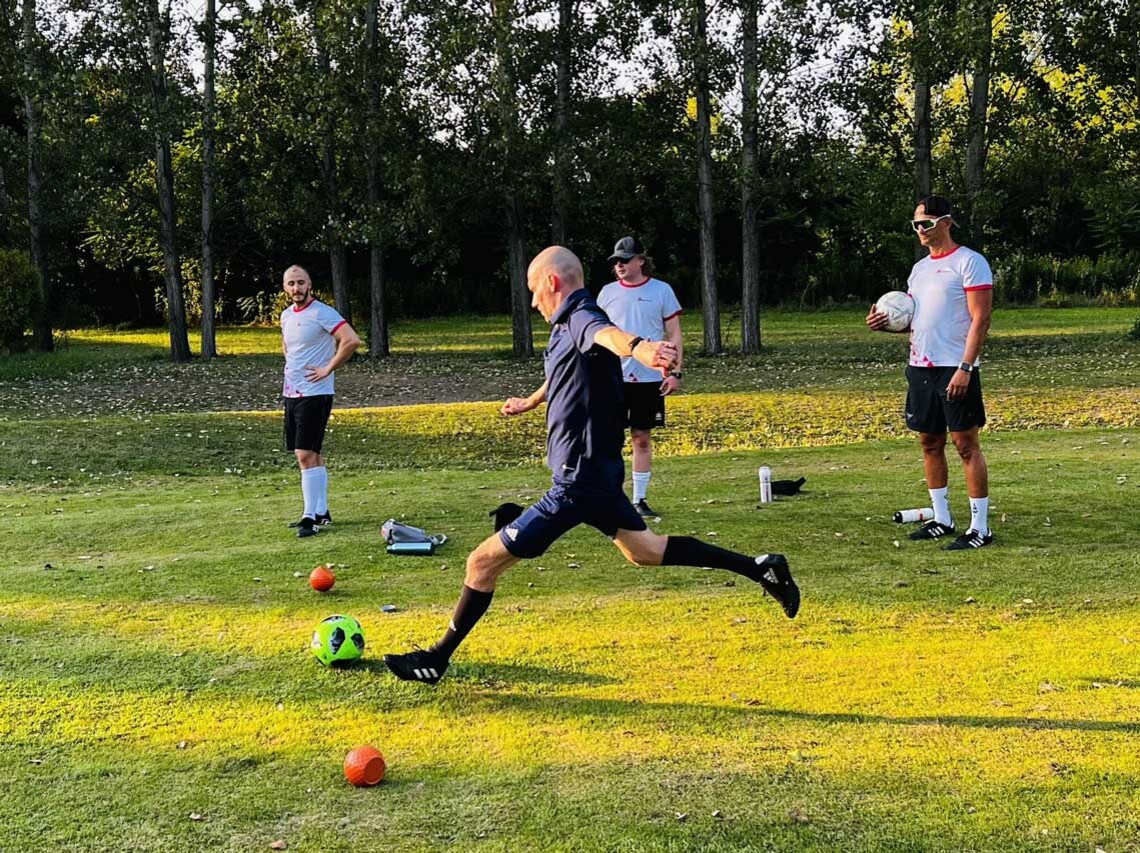
At ANASOFT, MultiSport is one of the benefits employees know well and actively use. According to HR Manager Katarína Melišová, new colleagues often ask about the card during onboarding. Many know it from a previous job or have used it as an accompanying card through someone close to them. “When we handle the onboarding of new employees, they definitely perk up when MultiSport comes up,” says Melišová. “A fairly large proportion of new employees are people who have already had one, either through an employer or as an accompanying card.”
Interest in the benefit is also encouraged by the fact that ANASOFT co-funds the card. This makes it more affordable for employees, and many are happy to use it. The card is usually activated after the probationary period, but the company can also take individual situations into account, such as when a new employee is familiar with MultiSport and knows they will actually use it. “Since we cover half the cost, people are happy to use it,” Melišová explains. “Normally, it’s after the probationary period, but when we know someone has used it before and will really make use of it, we give it to them earlier too.”
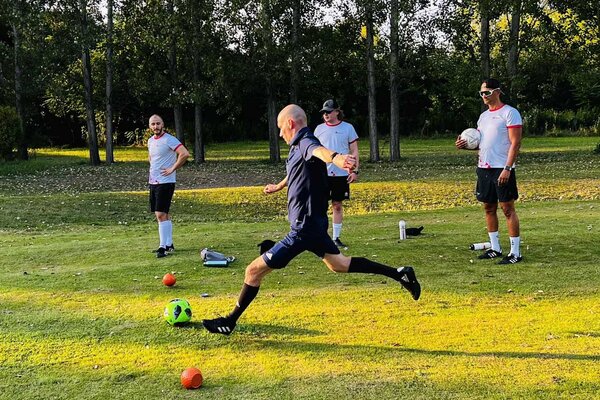
At ANASOFT, MultiSport is not limited to just one group of employees. According to the HR Manager, it is used by younger colleagues, university students working part-time, and employees aged 50+. “It’s spread across all age groups,” she says. Gyms are still the most popular, but employees also use swimming pools, yoga studios, and other facilities. The card is practical for colleagues who travel to Czechia or work there at the company’s branch.
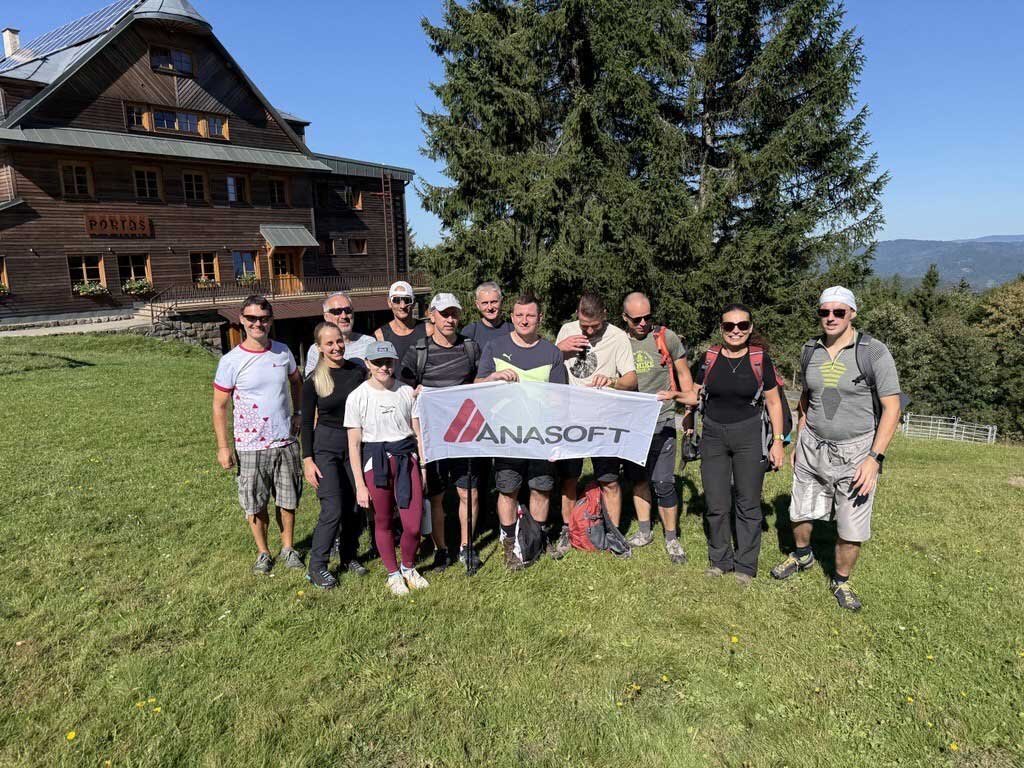
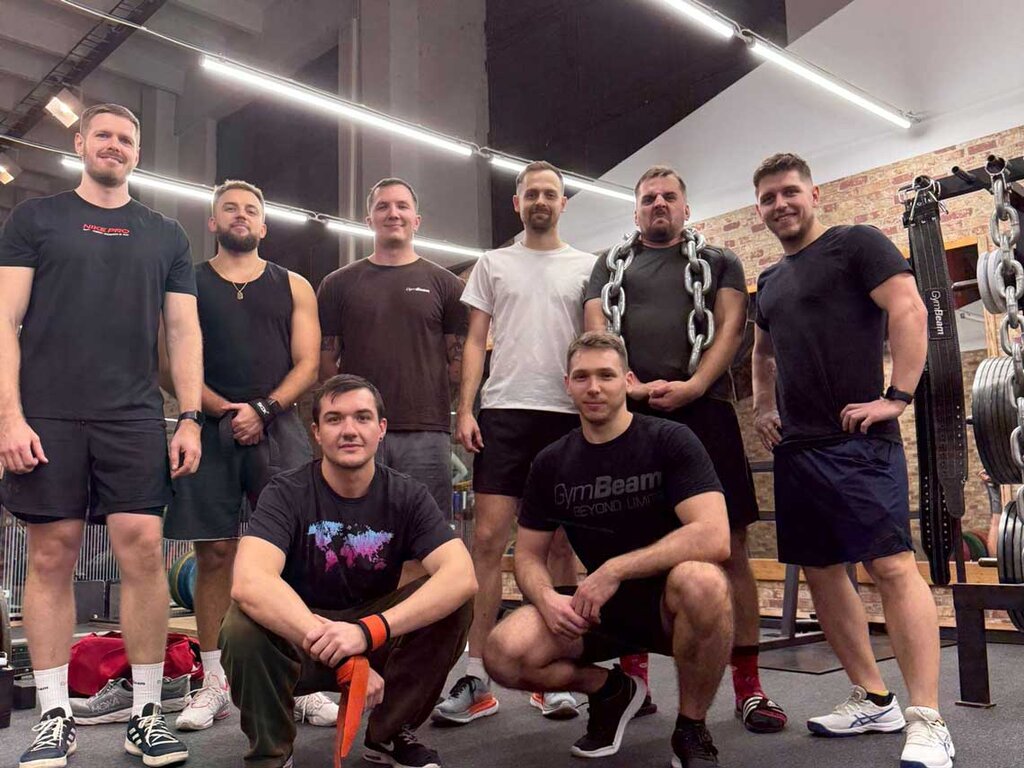
What matters is that ANASOFT sees benefits as more than just a list of perks. The company tries to shape them so they support not only individual satisfaction but also connections between people across teams and divisions. “We don’t have a benefits cafeteria, but we organize activities so people can get together,” explains ANASOFT’s HR Manager. When colleagues organize a training session, a sports challenge, or an internal competition together, the company supports them, for example with prizes or organizational help. According to the HR Manager, this matters in part because ANASOFT has several divisions, and people naturally tend to work mainly within their own teams. Shared activities help them get to know one another better outside of projects too.
MultiSport is therefore part of ANASOFT’s broader approach to health, well-being, and company culture. During health days, employees choose the topics that interest them, from physiotherapy exercises and carpal tunnel syndrome to osteopathy and the microbiome. “We tend to arrange it so people can choose what interests them. We don’t decide what we would choose for them; they choose for themselves,” adds Melišová.
That is also why, in our interview with MultiSport representative Barbora Gajdošová, we looked at this benefit more broadly—not just as a gym card, but as a way to support active leisure time, a healthier lifestyle, recovery, and family and team-building activities.
There have been several new developments at MultiSport this year. Which ones would you highlight?
Barbora Gajdošová: This year, we have several new developments. One of the biggest is that, from the start of the new year, the card is international. This means it can be used not only in Slovakia and the Czech Republic, but also in other countries, such as Croatia, Bulgaria, Turkey, and Poland. We have also added new types of activities.
For example, botanical gardens, which we did not previously offer. Racket sports are also very popular right now, especially padel, as well as Pilates and circuit training, which are available as group classes with a MultiSport card.
How does using the card abroad work?
First of all, users must have their card verified in Slovakia. All they need to do is visit a sports venue in Slovakia, where their very first visit with the card is verified together with their ID card. The second important thing is that only the virtual card can be used abroad. The virtual card is also being used more and more in Slovakia. Currently, around 60% of users use the virtual card, and we are gradually trying to make the plastic card less prominent. So abroad, the rule is: virtual card only.
What can someone do with a MultiSport card while on holiday, for example?
We have users I call “hard users”—people who work out every day. They expect to be able to stay active on holiday too. You might arrive at a hotel and find that there is no fitness center, that it is closed, or that it simply does not suit you. In that case, MultiSport can be very useful. But abroad, the card is not only about working out. Just as in Slovakia, it can be used for various recreational activities, water parks, Pilates, yoga, hiking activities, mini golf, or racket sports. Pickleball, a racket sport that came from America, is also gradually appearing in some countries. It is somewhere between table tennis and tennis, played on a court, and it is very interesting. So yes, you can really enjoy yourself with MultiSport outside Slovakia too.
How do you decide which activities to add to the offer?
We mainly expand the offer. We have a partnerships team that works on it every day. Feedback from users is very important. People often tell us they would like a specific center or activity in their area that is not yet in the network. We can then approach partners based on this feedback. Partners who would like to join the network also contact us. And of course, we keep an eye on trends. MultiSport has been on the Slovak market for twelve years, and the network is really broad. We offer around 230 types of activities, so we already cater to all age groups, from children to seniors. So it is less a question of having to invent activities for a specific group. We already have those. It is more about adding new trends and new options.
You say MultiSport is not just for people who exercise regularly. How can families with children use it?
That is a really good topic, because we often talk mainly about people who exercise. But I also really like talking about people who, for some reason, cannot or do not want to exercise. For families with children, we offer places such as castles, chateaux, museums, zoos, botanical gardens, ice rinks, mini golf, and various seasonal activities. If an employee has a card, they can also get an accompanying card for a spouse, family member, or friend, and of course a children’s card as well; each employee is entitled to up to three children’s cards. And if a family regularly goes somewhere, it can be very practical. The card’s main purpose is to cover admission fees. Most admissions are fully covered; places such as water parks, climbing walls, and wellness centers require an additional fee. Imagine the whole family going to an outdoor swimming pool, for example—the entrance fees can add up very quickly. With a MultiSport card, the cost can pay for itself after just a few visits.
Which activities are used most often?
Fitness centers are still at the top. They have held first place for a long time, partly because they are the strongest segment in our partner network. Swimming pools, water sports, yoga, Pilates, and health-focused exercise are also very popular. I’d like to pause on yoga and Pilates. Many people see them as gentler activities, but when you try Pilates, you often discover that it works muscles you did not even know you had. Really. If you go to Pilates, you may curse me, but it is a very good workout. Rehabilitation and therapeutic exercise are also very interesting. For example, in Bratislava we have Reha Sport on Bajkalská Street, which also works with athletes and offers group rehabilitation sessions that are available with a MultiSport card. From the feedback I hear, people have had a very good experience with it. Of course, as with everything, consistency is important.
Does card use change with the seasons?
Yes, definitely. In summer, people use paddleboards, kayaks, swimming pools, and outdoor pools more. But gyms are open year-round. They hold the top spot throughout the year. At the same time, yoga, Pilates, group classes, and dance lessons are catching up quickly. We offer salsa, dance, and pole dance, for example. With pole dance, I’d like to say that many people still view it through certain prejudices, but it is an official sport and one of the most physically demanding activities you can try. And that is what is interesting about MultiSport. When people realize it is not only about gyms, they start trying other activities too.
Why do you think gyms remain so popular?
Because people want to feel good. Mentally and physically. They want to like what they see in themselves, have energy, and take care of themselves. I think we have a completely different generation now. We millennials are also trying to take care of ourselves, but Gen Z is especially strong in this respect, and I admire that. I also think we deserve some credit for this, because people talk more about how important it is to take care of mental as well as physical health. There are now many experts and studies showing that exercise is essential. You can ignore it, but exercise, diet, and self-care have a huge impact on how we feel.
What would you recommend to someone who is not sure whether they will use the card?
I always say one thing: you have to experience it for yourself. That is my motto, which I got from my wonderful team leader. And it is absolutely true. During the trial period, people can find out whether the card is right for them. Some decide it is, order one, and go for it. Others say it is not for them. And that is fine. One advantage is that the card is not a long-term commitment. You can have it for one, two, or three months, and you can suspend it. It often happens that someone says at the beginning, “I don’t even want to listen to you; I’ll never have MultiSport in my life.” And when I’m leaving, they say, “All right, I’ll give it a try.” For me, that is a win. Not because I’m selling a card—that is not how I see it. But because that person may have realized it is time to spend their free time more meaningfully.
What does the MultiSport card mean to you personally?
For me personally, MultiSport is not just a plastic card that pays for my admissions. It gives me enormous freedom. I can do something different every day. On Monday I can go swimming, on Tuesday work out, and on Wednesday go to a climbing wall. In Bratislava, I can use a Rekola bike. I also have cards for my family and children, so we really save a lot of money on admissions each month. But even more importantly, the card gives me the chance to try new things. Thanks to MultiSport, I have tried activities I might never have done without it. I tried pole dance, yoga, badminton, tennis, and squash. At first I was a little apprehensive about yoga; I am very tall and was not sure it would suit me. In the end, I found that I really liked it. And it is not just about sports. Thanks to the card, we also visit castles, chateaux, and museums, and go to Devín, Rusovce, Gerulata, and the arboretum. These are all activities that someone might not be as motivated to try without the card.
Can MultiSport also be used for group activities or team building?
Definitely. And I think it is a very good team-building tool. For some activities, such as bowling, beach volleyball, or padel, if four people come and each has a MultiSport card, they can use a lane, court, or pitch for an hour free of charge. It works similarly for racket sports: if two people have a card, they can use a court for an hour free of charge. It is also excellent for workplace relationships. When I visit companies, I sometimes see people look at each other when I say, “Come bowling together.” Their look says, “Do I have to spend time with them outside work too?” But that is exactly the point. Relationships at work are just as important as relationships at home. It is easier to return to work when we are happy to be there. Budget is also important for team building. If you save on an activity, there will be more left, for example, for dinner. So MultiSport can support not only health but also the social climate at work.
How do people use the card when they get it for the first time? Do they try everything right away or stick to familiar activities?
It varies a lot from person to person. Most people get the card because they realize, “Oh, there’s a center on it that I already go to.” At first, they stick to their comfort zone. But then it often happens that I return to the company or branch a year later and people tell me, “You know, thanks to you I’ve made more time for myself.” Those are very moving moments for me. I encourage people not to forget about themselves.
Each of us is the most important person in our own life. When you are doing well, the people around you usually feel better too. And when someone tells me that, after a talk about well-being, they shared out the household chores and can finally go to yoga with a friend, it gives me goosebumps.
Is there a story that has stayed with you?
There are several, but one is especially powerful for me. I was giving a presentation at a manufacturing company in Trnava. I had everything ready, and I also bring small gifts with me because I want to make people’s day. The presentation had been announced and was supposed to last half an hour. And nobody came. Absolutely nobody. People were going from one shift to another, and I was sitting there alone. I had already started packing up. Then suddenly Mrs. Anka appeared in the doorway. I will never forget her. She was a cook, nearly seventy years old, had both hips replaced, and had tremendous energy. She came over and asked what I was doing there all by myself. We started talking, and she got a card free for a month because there is a water park in Trnava where she could use the card and pay an additional fee. She said to me, “Then I’ll go and help my joints.” Just one person came. But it meant more to me than if the hall had been full.
Do you notice a difference between people in manufacturing and people in offices?
Yes, there is a difference. It is about mindset, work schedules, opportunities, and also energy. People in manufacturing often work shifts, including night shifts, and after twelve hours they want to go home. Their free time is time they want to spend at home. And to some extent, I understand that. Night shifts are very exhausting. I experienced them myself during a student job, and I know that after a night shift a person can sometimes struggle to function normally. On the other hand, people in administration often have more room to plan their time after work. Exercise is also very important for people with sedentary jobs. It is not just about back pain, but also, for example, carpal tunnel syndrome. I had that problem too, and it was only a colleague who taught me how to do the exercises correctly. Paradoxically, sedentary work is often what motivates people to get up from their chairs and start moving.
Burnout is being talked about more and more. Can exercise help prevent it?
I always say: don’t let things get to the point where you burn out. It can be addressed, but prevention is much better. Burnout is a truly serious condition. A person experiences not only physical exhaustion, but especially emotional and psychological overload. I have been through it myself, and I would not wish it on my worst enemy. That is why I say that an hour a day just for yourself is not a cliché. In my opinion, it is worth more than two chocolate bars a day. If I can use my MultiSport card to help prevent something like that from happening to me, I go swimming, paddleboarding, to a sauna or wellness center, or hiking. Everyone has to find what works for them. Personally, the gym does not help me as much as running, walking, or swimming. For some people it might be yoga; for others, cycling.
You mentioned Rekola bikes. How does that work?
In Bratislava, you can also use Rekola bikes with a MultiSport card. It works like this: you get one entry to an activity plus two one-hour Rekola bike rides for free. So you can imagine a very practical scenario: after work, you take a bike, unlock it through the Rekola app, ride to Draždiak, for example, use your MultiSport card to go paddleboarding there, clear your head and sort out your thoughts, and then ride back. This is exactly how you can make full use of the card.
How does MultiSport relate to hiking?
Hiking does not have to mean a classic climb in the mountains. Many castles and chateaux are on hills, so visiting a castle can be a pleasant combination of exercise and culture. We have castles, chateaux, museums, and activities such as via ferratas. Near Zobor in Nitra, you can rent via ferrata equipment with the card. I would not go on a via ferrata myself because heights make me nervous, but clients combine activities this way. They hike up and then do another activity. To me, this is a lovely combination of pleasure and usefulness. You get moving, reach a destination, and experience something new at the same time.
What would you say to people who have the card but do not use it very much yet?
At least give it a try. You do not have to go straight to the gym if the gym is not your thing. You can go swimming, take a walk that includes a visit to a castle, try yoga, go bowling with colleagues, visit a museum with your children, or simply go for a bike ride. For me, MultiSport is not about performance. It is about the freedom to choose what I need at that moment. Sometimes I need exercise, sometimes recovery, sometimes time with my family, and sometimes just a little time to myself. And above all, you have to experience it for yourself. Until you try it, you do not know whether it is for you.