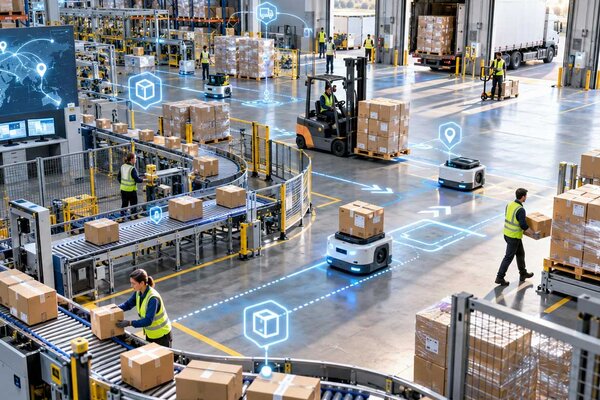
How to bring returns under control using reverse logistics
2026-09-16 | 17 min Logistics and Manufacturing
The sales process does not end with the dispatch of an order. In e-commerce and distribution, a portion of the goods returns to the distribution center, where a decision must be made regarding whether the items can be resold or require inspection, repair, return to the supplier, or disposal. Consequently, reverse logistics is not simply the dispatch process in reverse; rather, it is a distinct warehousing process driven by the speed of identification, the condition of the goods, and the ability to return usable stock to sale as quickly as possible.
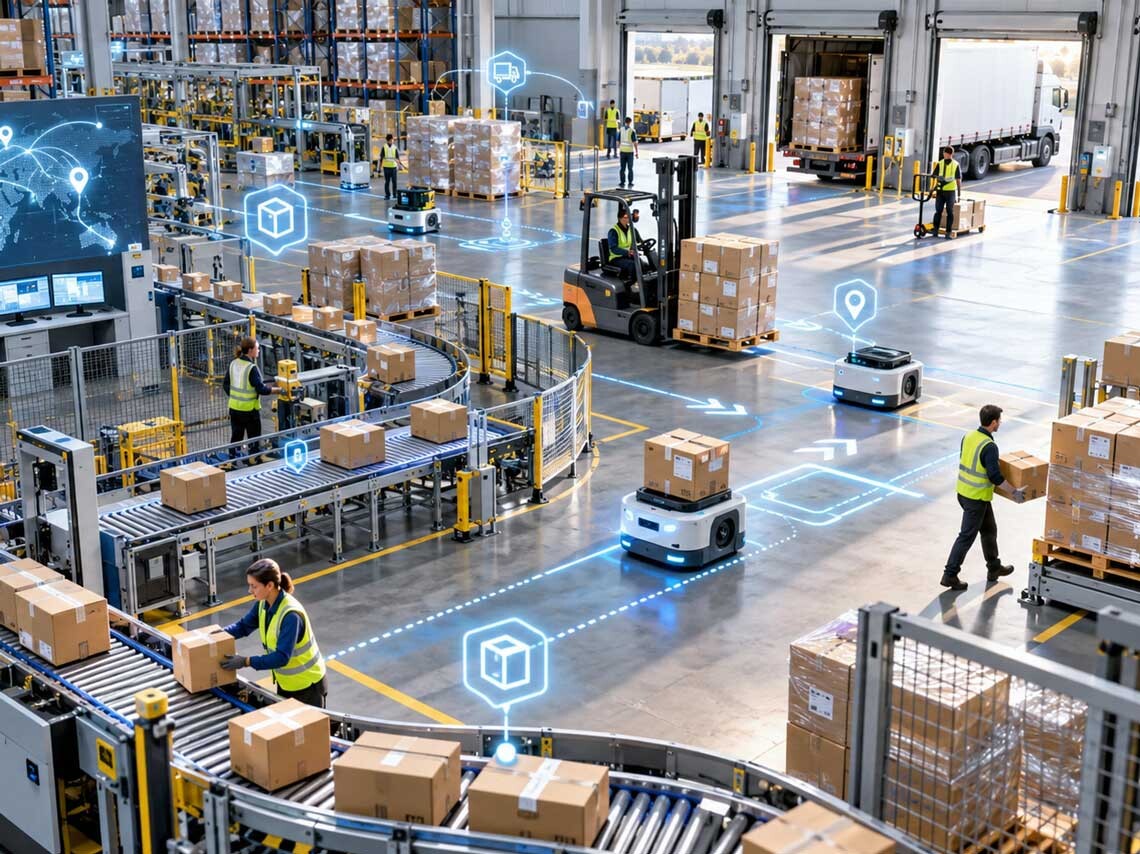
In standard shipping, the direction of inventory is clear. Goods are picked, checked, packed and leave the warehouse according to the order. With a return, the same product comes back, but its next journey is no longer clear in advance.
One item may be unused and therefore immediately saleable. Another may have damaged packaging, a third may require a technical inspection, and a fourth may no longer be suitable for resale. It is precisely this decision-making that turns returns into a logistics process requiring its own rules.
A return is not merely the receipt of goods moving in the opposite direction
With standard receiving, a warehouse usually expects defined goods from a known supplier. It knows the quantity and items ordered, and often the planned delivery time as well. With returns, the situation may be less predictable because different products come back in different physical conditions and for different reasons. When receiving a return, the warehouse therefore needs to do more than confirm that the product has physically arrived. It must determine:
- which order it belongs to,
- why it was returned,
- what condition it is in,
- whether it is complete,
- whether it can be resold,
- where it should be moved next.
While the main objective of conventional receiving is to put inventory away, reverse logistics must first determine what the inventory actually represents.
What can happen to returned goods
Not every return has the same outcome. In a simple process, everything may be placed in a single returns zone, where decisions about the items are made later. As volume grows, however, such a model creates inventory that physically exists but is unusable from a business perspective. Typical decisions may look like this:
| Return status | Next step |
| Undamaged | Return to saleable inventory |
| Damaged packaging | Inspection or repackaging |
| Incomplete product | Complaint processing |
| Technical fault | Service or repair |
| Not suitable for sale | Write-off or disposal |
| Supplier error | Return to supplier |
The faster this decision is made, the sooner the goods can be returned to the correct flow. The biggest problem in reverse logistics is often not the number of returns itself, but the time they remain in an indeterminate state.
In e-commerce, returns are a standard part of fulfillment
In e-commerce, returns are a natural part of the customer journey. Consumers cannot physically inspect a product before purchase, and in some categories, such as fashion or footwear, the return rate may be significantly higher than in traditional retail. Logistics must therefore treat returns as a standard flow, not as an exceptional complaint.
As the number of orders grows, so does the absolute number of products returning to the distribution center. This creates a need for capacity for receiving, inspection, sorting and further processing. If this flow is not managed as systematically as shipping, it can gradually become a bottleneck.
In e-commerce logistics it is therefore important to view the warehouse as an environment that must handle several parallel flows. Orders move out, while some inventory simultaneously returns and needs to be reintroduced into circulation.
The most expensive return is the one that waits
A returned product often still has commercial value. If it is undamaged, it can quickly be returned to saleable inventory after inspection and appear as available again in the online shop or retail store. Every day of waiting, however, means capital remains tied up in inventory that cannot be sold. This problem is particularly significant for:
- seasonal products,
- fashion,
- consumer electronics,
- fast-moving goods,
- products with a short sales cycle.
A product may be fully functional, but if it is processed too late, its commercial value may have declined in the meantime. The speed of return processing is therefore not merely a warehouse KPI; it directly affects the company’s ability to recover the value of its inventory.
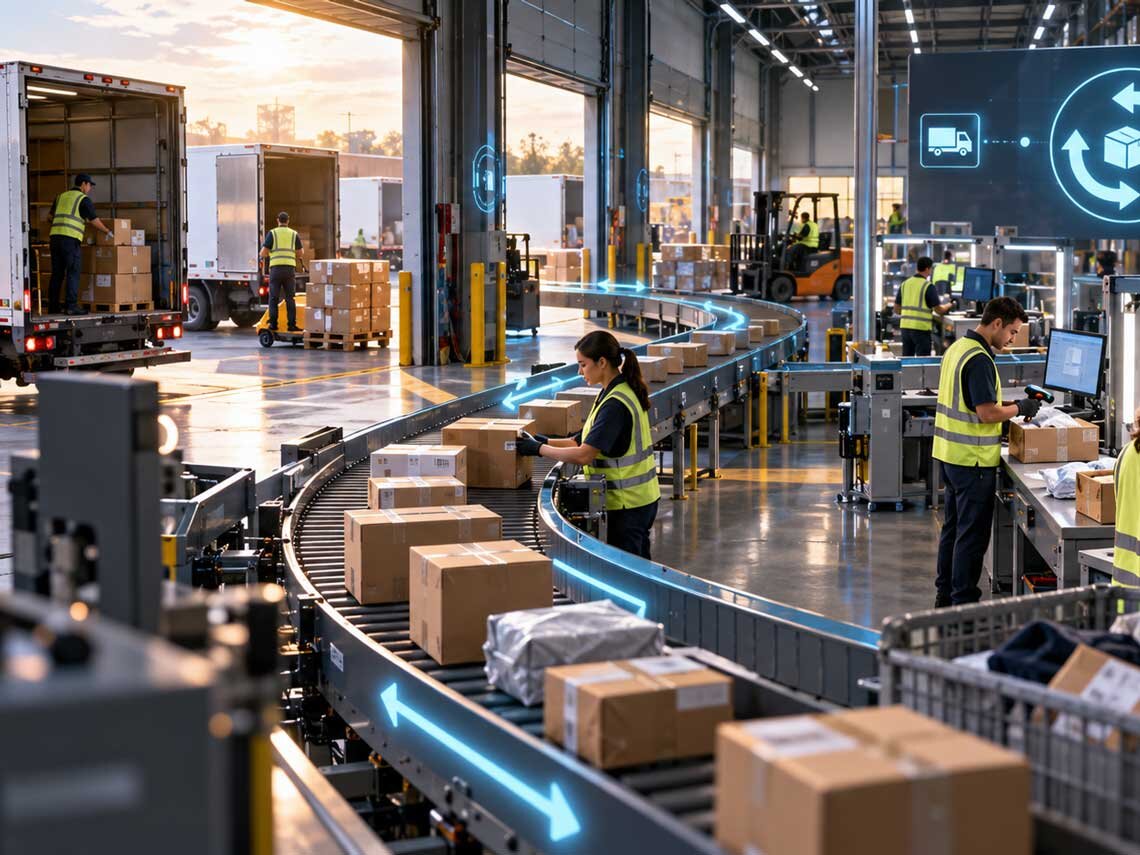
Step one: the return must be clearly identified
After physical delivery, the warehouse needs to know what the return relates to. If an employee manually searches for the original order by the customer’s name, parcel number or email correspondence, processing slows down considerably. With a higher volume of returns, this creates room for errors.
Ideally, a return can be linked to the original sale using a unique identifier. The system can then show the employee, for example:
- the original order,
- the item and quantity,
- the reason for the return,
- the date of sale,
- the serial number or batch,
- additional processing rules.
In this way, the WMS does more than record receipt. It provides the context the operator needs to decide on the item’s next movement.
Step two: condition inspection must follow clear rules
The greatest uncertainty with a return arises when deciding whether the product can be resold. If every employee assesses its condition based on personal experience, the result may be inconsistent. One operator may accept a particular type of damage while another evaluates it as grounds for disposal. It is therefore advisable to define inspection criteria by product type. The assessment may include, for example:
- the condition of the product,
- the condition and completeness of the packaging,
- accessories,
- signs of use,
- mechanical damage,
- functionality,
- hygiene or safety requirements.
These rules can then be transferred into a digital workflow. The operator does not need to memorize every exception, but follows defined steps, and the inspection result becomes part of the system record.
A return should receive a new status immediately
One problem in manually managed reverse logistics is the inventory “gray zone.” The product is no longer with the customer, but is not yet available for resale. It may be physically present in the warehouse, while the system does not know whether it is saleable inventory, damaged goods or an item awaiting inspection. The WMS can assign the return a specific status, for example:
- received,
- awaiting inspection,
- suitable for resale,
- blocked,
- awaiting service,
- designated for return to the supplier,
- designated for write-off.
An accurate status prevents physically present inventory from being considered automatically available. This is especially important when the warehouse is connected to an online shop or other sales channels.
Sales availability should change only after inspection
In fast-moving e-commerce, there is a natural desire to return a product to sale as quickly as possible. However, automatic putaway that happens too quickly may result in a customer being sold an item that has not yet been inspected. Speed must therefore be combined with a clear approval step. A practical flow may look as follows:
- the return is received,
- the original order is identified,
- the product is inspected,
- the system determines its status,
- a suitable item is returned to saleable inventory,
- the system updates availability for other channels.
This process shortens the time between physical return and resale without losing control over quality.
In omnichannel retail, a return may arrive somewhere other than where the order was created
Modern retail often combines an online shop, brick-and-mortar stores, marketplace platforms and other sales channels. A customer may order online and return the product in a store, or the parcel may return to a different logistics point from the original shipping warehouse. Reverse logistics therefore does not have to mirror the order’s original route.
Questions arise:
- should the goods remain in the store,
- should they be moved to the central warehouse,
- can they be sold locally immediately,
- do they need to be sent for inspection,
- which warehouse should add them to inventory?
In omnichannel operations, shared inventory visibility across individual logistics nodes therefore becomes increasingly important. Solutions for large distribution and fulfillment operations must handle precisely this type of complexity, while advanced WMS systems also account for the management of omnichannel retail and multiple warehouse zones.
Reverse logistics creates its own picking process, but only partly in the opposite direction
At first glance, a return may look like shipping run in reverse. The product comes back to the warehouse and is then moved back to its original location. In practice, however, there is often no single target location because the direction is determined only by the inspection result.
One return may go directly into saleable inventory, another to the repacking zone, and a third to quality control. Based on the status, the WMS therefore needs to create the next task and select the target location. The warehouse worker does not need to decide manually where to place each item. Reverse logistics is therefore not movement back along the same route, but a branching process in which the next direction is determined by the product’s condition.

Streamline Logistics and Warehouse Management with EMANS WMS
Gain better visibility into your supply processes, simplify day-to-day logistics operations, and make more efficient use of your warehouse capacity.
Contact usThe returns zone must not become the warehouse’s black hole
As return volumes grow, many warehouses create a separate zone where returned goods are temporarily placed. Such a zone is practical if it serves only as a short intermediate step. A problem arises when it becomes long-term storage for items without a clear owner or next step. Typical warning signs include:
- a growing number of unprocessed returns,
- items without a clear status,
- manual lists outside the WMS,
- repeated searches for a specific product,
- an unknown time since the return was received,
- a discrepancy between the physical and system status.
A WMS can manage this space in the same way as other warehouse zones. Every item has an identity, status, location and an open or completed task, preventing the returns zone from becoming a place where inventory ceases to be visible.
Returns also require priority management
Not every return needs to be processed at the same speed. A high-demand product with low available inventory may have a significantly higher priority than a slow-moving item of which the warehouse has ample stock. Seasonal goods whose sales period is ending quickly may likewise take priority. The decision may take into account, for example:
- current demand,
- inventory status,
- product value,
- seasonality,
- time since the return was received,
- the type of inspection required.
This approach transforms returns from a single shared queue into a managed process based on business impact. More advanced logistics solutions can also use analytics and return forecasting to improve reverse-logistics capacity planning.
Returns also affect warehouse capacity planning
A high order return rate does more than create more items to inspect. It requires workstations, space, people and, depending on the product range, service or repacking capacity. If returns are processed by the same employees as receiving or shipping, a seasonal increase can create conflict between processes. This is typical, for example, after:
- Black Friday,
- Christmas,
- seasonal sales,
- marketing campaigns,
- significant growth in e-commerce sales.
An order peak may therefore carry over into reverse logistics with a delay. A distribution center needs to plan not only for the maximum shipping volume, but also for the subsequent flow of returning parcels.
The link to the customer process is also important
Reverse logistics does not end when the courier delivers the parcel back to the warehouse. For the customer, the process may end only after the return is confirmed, the money is refunded or a replacement product is sent. The speed of warehouse processing may therefore directly affect the customer experience.
If the status of a return is not digitally available, customer support may repeatedly seek information directly from the warehouse. This creates phone calls and manual checks such as, “The parcel has arrived, but we still do not know where it is.” Systematic process tracking makes this information available to other business applications. In reverse logistics, therefore, the WMS does not merely manage goods. It also creates a data status that allows sales and customer processes to continue.
Not every return belongs back in the same warehouse
In retail or larger e-commerce operations, a company may run multiple warehouses, fulfillment centers or stores. It may be more economical to keep a returned product at a location with high demand than to move it automatically back to the original warehouse. Reverse logistics thereby connects with inventory management across the network. Before the next transfer, it may be relevant to consider:
- local demand,
- existing inventory,
- transport costs,
- product condition,
- future orders.
Advanced warehouse management therefore does not see a return merely as an item heading “home.” It can place it where it has the greatest further value for the business.
Returns generate valuable data about products and the customer process
The reason for a return is not merely an administrative detail. With enough data, it can highlight a problem that arises before the warehouse stage. Repeated returns of a specific SKU may indicate an inaccurate product description, unsuitable packaging, a sizing problem or a quality issue.
It is therefore useful to track, for example:
| Metric | What it may reveal |
| Share of returns by SKU | Problematic products |
| Reason for return | Product or process problem |
| Processing time | Reverse-logistics performance |
| Share of items suitable for resale | Ability to preserve value |
| Time to restocking | Tied-up inventory |
| Write-offs from returns | Financial impact |
Such data makes it possible to view reverse logistics as more than an unavoidable cost. It can provide information for purchasing, quality, packaging and the e-commerce process itself.
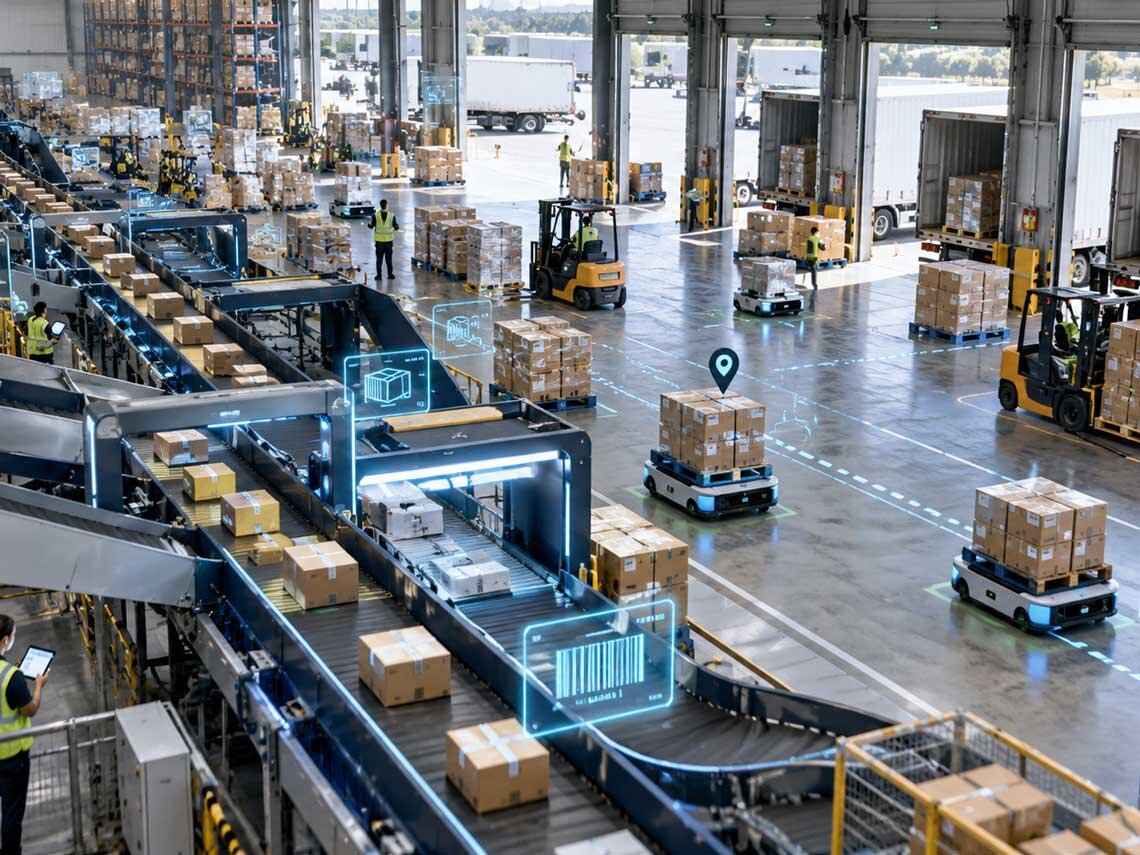
The most important KPI may not be the number of processed returns
The number of items handled per hour is a useful operational metric, but it may not provide the full picture. Fast processing has little value if a large proportion of potentially saleable goods is incorrectly written off. Likewise, thoroughly inspecting a low-value item is inefficient if the processing costs exceed its value. It is therefore appropriate to combine speed with decision quality.
The warehouse can track:
- the average time from receipt to decision,
- time to restocking,
- the proportion of returns put back on sale,
- the value of blocked inventory,
- the cost of processing a return,
- the write-off rate.
The goal of reverse logistics is not to process as many returns as possible. The goal is to assign every return the economically and operationally correct next step as quickly as possible.
A WMS helps connect a return to the next warehouse flow
Growth in return volume means growth in the number of decisions and handling tasks. A manually managed process may work without major problems at lower volumes, but with hundreds of returns a day, the system status and the physical status can easily diverge. Returns then become a separate warehouse within the warehouse.
A WMS can connect the process into a single flow:
- identify the return,
- assign it to the order,
- record the inspection result,
- change the inventory status,
- create the next warehouse task,
- assign a target location,
- update availability for other systems.
The benefit is not merely the digitization of records. Every decision automatically creates the next step, so a return does not remain between two processes without an owner.
Reverse logistics must be part of the entire warehouse
If returns are handled completely separately from the standard WMS process, data may be duplicated and statuses may need to be re-entered manually. The product physically returns, but the sales system does not know about it, or it is returned to available inventory before the warehouse has actually moved it to a saleable location. An integrated flow limits these discrepancies.
Integration is particularly important with:
- ERP,
- the e-commerce platform,
- the order management system,
- customer service,
- carriers,
- and, where applicable, service or complaint processes.
Just as when moving from simple record-keeping in ERP to operational warehouse management, value in returns arises when the system not only records the status but also creates subsequent warehouse operations based on it.
When returns require system-based management
A small online shop with a few returns a week does not need a complex reverse-logistics process. An employee can inspect the item manually, decide on its status and put it back into stock. The need for a systematic, managed flow grows with volume, product range and the number of different scenarios.
Warning signs include situations where:
- returns accumulate in a separate zone,
- the current status of a particular item is unknown,
- customer support checks the status of a return by phone,
- usable goods wait days to be restocked,
- system inventory does not match the physical status,
- decision-making depends on particular experienced employees,
- reliable data on the reasons for and outcomes of returns is unavailable.
Together, these signs indicate that reverse logistics is no longer a peripheral process. It is becoming a distinct component of distribution-center performance.
Good reverse logistics begins before the parcel returns
The most efficient return is one the warehouse knows about before physical delivery. If the customer or sales system creates a return request in advance, logistics can know which product is likely to come back and why. This reduces the time needed for identification during receiving.
A process created in advance may include:
- a return identifier,
- the original order,
- the item,
- the stated reason for return,
- the shipping method,
- the expected destination for further processing.
The warehouse can thus prepare for the expected flow in much the same way as it prepares for standard receiving. The decision about condition naturally remains subject to physical inspection, but the administrative part of the process can be considerably simpler.
Reverse logistics is not a cost that should merely be minimized
Returns naturally create additional work, transport and handling. Completely eliminating them, especially in e-commerce, is not a realistic goal, while an overly complicated return process can also have a negative impact on the customer experience. It is therefore better to focus on the efficiency of the entire process.
Well-managed reverse logistics can:
- accelerate the return of inventory to sale,
- reduce the volume of unidentified inventory,
- limit unnecessary write-offs,
- improve visibility of warehouse status,
- speed up customer service,
- provide data on the reasons for returns.
In omnichannel retail in particular, this capability forms part of broader warehouse management. Advanced WMS systems account for return and reverse-logistics analytics alongside the management of distribution and fulfillment processes.
From a returns zone to a managed flow
Reverse logistics is under control only when a company can answer three basic questions: what was returned, what condition is it in, and what should happen to it next. If any of this information is missing, the return becomes inventory that takes up space, ties up capital and creates additional manual work.
It is therefore advisable to map the entire process from return notification to final status. It is important to track where the longest waits occur, which decisions are made manually, and how quickly saleable inventory reappears as available after inspection.
EMANS WMS makes it possible to manage warehouse zones, inventory, operators and subsequent logistics tasks within an integrated warehouse flow. In reverse logistics, however, its value does not come from merely recording a return, but from the ability to move every returned product into the correct next process as quickly as possible.
Consult logistics experts about returns management and reverse logistics
Frequently Asked Questions
Reverse logistics involves the flow of products in the opposite direction to standard distribution—for example, in the case of customer returns, warranty claims, or goods returned from retail stores. The process encompasses receiving, inspecting, and sorting the products, as well as deciding on their subsequent use; this does not necessarily entail a return to the original warehouse.
Before resale, its condition must be verified to determine whether it meets the required standards. The product might be damaged or incomplete, or require servicing or repackaging. Automatically returning every returned item to available stock would therefore create a risk of further erroneous orders.
A WMS system can identify a return, assign it a status, and—based on the inspection result—create a subsequent warehouse task. It can thus manage the transfer of the item to saleable stock, the service zone, blocked stock, or another process. The result is improved visibility regarding the location of each return.
It depends on the product range and business model, but key metrics often include the time elapsed from receiving a return to making a decision, as well as the time taken to restock the item for sale. The proportion of returns put back into inventory and the value of stock awaiting processing are also useful indicators. The sheer number of processed items does not necessarily reflect the quality of the process.
E-commerce is one of the sectors where this is particularly evident, as returns are a standard part of the customer journey. However, it is also significant in brick-and-mortar retail, distribution, service operations, and B2B logistics. The main difference lies in the volume and types of decisions that must be made when a product is returned.
A product purchased through one channel can be returned via another. For example, an online order might be returned to a brick-and-mortar store and subsequently remain in local inventory or be transferred to a distribution center. Therefore, the WMS and other systems need to maintain shared visibility of its status across channels.
This is particularly true when the volume of returns rises, long waiting times occur, or inventory levels are managed manually outside the main warehouse system. Another indicator is when usable goods remain unavailable for resale for extended periods. At that point, reverse logistics impacts not only warehousing costs but also inventory availability and customer service.