
Artificial intelligence is beginning to disrupt the functioning of domestic companies
2019-07-22 | 5 min Logistics and Manufacturing
According to Slovak managers, artificial intelligence will change industry, transport and logistics the most. But what are the real benefits of artificial intelligence elements for business?
Media reports in recent months leave no doubt that the world is facing revolutionary changes. They will be driven by artificial intelligence, which already animates faces from works of art, defeats people at computer games, composes music and writes lyrics so good that even its creators are afraid of it. But what are the real benefits of artificial intelligence elements for business? And do Slovak entrepreneurs and managers even understand how these technologies can help them?
Artificial Intelligence Here and Now
The largest Slovak survey on artificial intelligence among company owners, directors and managers, prepared by the Go4insight agency, shows that the time for artificial intelligence (AI) is already coming in Slovak business. And this despite the fact that almost three-fifths of companies still have no idea about the benefits of artificial intelligence for business, or have only basic information about its practical use.
Knowledge of the practical use of artificial intelligence in companies in Slovakia (source: Go4insight)
Ignorance of the potential of artificial intelligence may seem high, on the other hand, a quarter of companies know in detail what this innovative technology can do and are already using it today, or are at least intensively studying this topic. And in the next three to five years, up to 70% of companies intend to deploy some technology from the artificial intelligence category.
Today, companies mainly use predictive analytics (30%) as an element of artificial intelligence, i.e. software systems capable of predicting, for example, machine failures based on data models, or warning about the need to replace a component that, if it fails, will cause great damage. Other artificial intelligence technologies used include machine learning (27%), image analysis or machine vision (24%), autonomous robots (18%) and voice recognition (11%).
Current use of artificial intelligence in businesses in Slovakia (source: Go4insight)
Which industries are being changed by artificial intelligence today
Artificial intelligence technologies are already widely used in industry, logistics processes, but also in finance and trade.
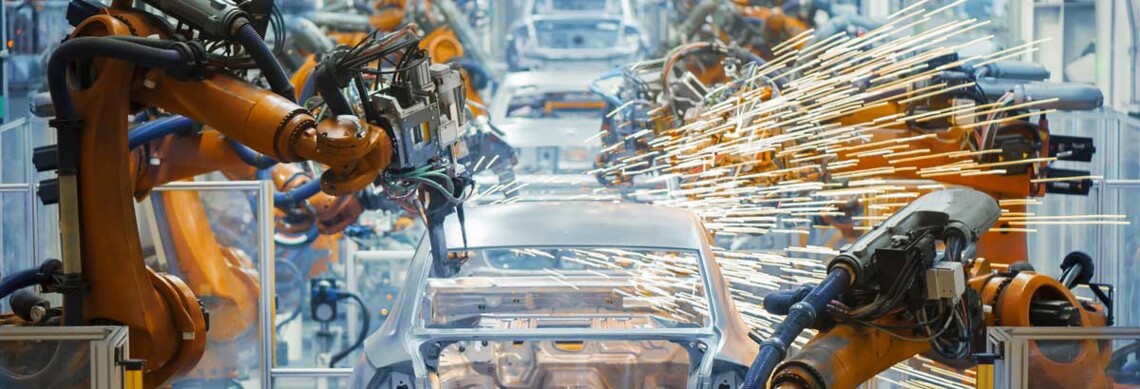
Smart Industry control systems already ensure autonomous management of production and logistics processes in many factories, from production lines, through warehouses, to shipping and transport, i.e. management of the entire supply chain.
In intra-company logistics processes, i.e. in warehousing, internal supply and shipping, automated guided vehicles (AGV) controlled by intelligent WMS (warehouse management system) systems, as well as voice recognition technologies, for example, to make work in warehouses more efficient and in supply management in the form of Pick-by-Voice (voice-controlled picking of goods or materials).
In banks and insurance companies, systems with machine learning elements have been predicting which offer to present to which client for years, so that marketing campaigns and sales are more effective. In addition to predictive analytics, technologies for digital handwritten signatures, which use artificial intelligence to verify and authenticate biometric elements, are also beginning to be promoted in the finance industry.
Artificial intelligence is in business, although it is not visible
In addition to industry and finance, according to Slovak entrepreneurs and managers, artificial intelligence will also change retail and wholesale. Humanoid robots such as Pepper already assist in some stores today. But bigger changes are taking place, so to speak, behind the scenes. Similar artificial intelligence control systems used in industry are automating storage and picking processes in retail and wholesale.
Modular Smart Industry systems designed for warehouse automation or autonomous intralogistics ensure even utilization of people in the warehouse, while taking into account current stock levels (inventory management) and various unexpected situations, such as delays due to faulty packaging or incorrectly picked orders.
To deepen automation in shipping, some companies are already using, or at least experimenting with, automated and autonomous picking robots with machine vision, which can learn to pick specific items even in an unfamiliar environment, i.e. from a pile of other items.
Expected benefits outweigh concerns
The adoption of artificial intelligence in business is irreversible, despite certain concerns expressed by Slovak entrepreneurs and managers. For example, that artificial intelligence may not be transparent, biased or discriminatory and thus negatively affect the customer experience or reputation of the company, or that it will have a bad impact on the company culture and employee motivation.
Benefits of artificial intelligence in companies in Slovakia (source: Go4insight)
However, the expected benefits from the deployment of artificial intelligence are clearly overshadowed by the expressed concerns. The vast majority (93%) of companies expect artificial intelligence to increase efficiency and productivity, automate and accelerate decision-making (88%) and improve innovation, including the creation of new products and services (84%).
According to company owners, directors and managers, artificial intelligence will find its greatest application (and at the same time bring the greatest changes) in the coming years in Slovakia in industry (82%) and in transport and logistics (75%), but they also see relatively large potential in finance (44%) and trade (22%).
Sectors of application of artificial intelligence in business and enterprises in Slovakia (source: Go4insight)
For example, in industry and logistics, new possibilities are opening up for self-configuration of control systems that will be able to synchronize multiple interconnected activities without human intervention, such as Just-in-Time supply.
With the growing autonomy of devices and the expansion of cognitive functions such as the ability of machines to learn, cooperate with surrounding systems and predict, it will lead, in conjunction with Smart Industry control systems, to the emergence of comprehensive autonomous industrial and logistics systems.
For companies from practically all sectors, artificial intelligence brings enormous opportunities for improving processes, for saving costs or for faster and more qualified decision-making. On the other hand, like all disruptive changes, the advent of artificial intelligence will also have its victims. As is traditional, those who ignore the ongoing changes so persistently until they finally miss the train will end up in the corporate graveyard.


